The Design of the Ferrari 849 Testarossa

This report delivers the first coverage of the new car, including an interview with Flavio Manzoni, Chief Design Officer of Ferrari Centro Stile, who directed the design development.
TEXT: Osamu Namba PHOTO: Ferrari
The 849 Testarossa Has Arrived!
At the unveiling in Milan, the Spider was presented alongside the Coupe, with the Assetto Fiorano package also on display. The new model appeared clothed in a design that embodies contemporary themes, signaling a bold transition toward Ferrari’s new-generation design language. Let us begin by exploring the composition of its forms.

Exterior Design

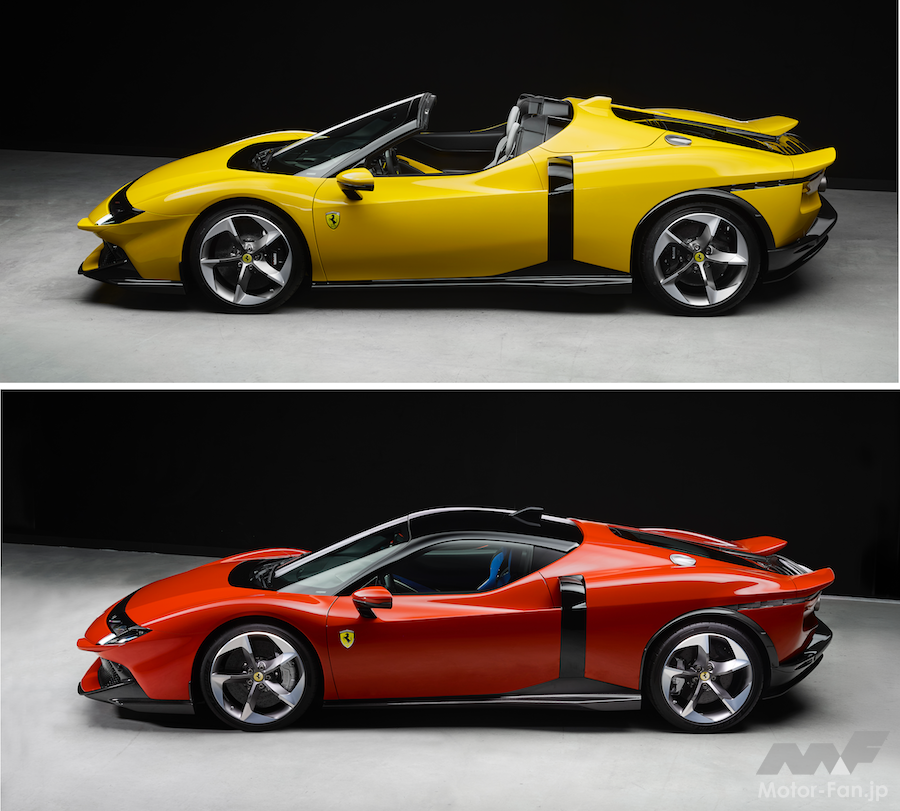
SideView
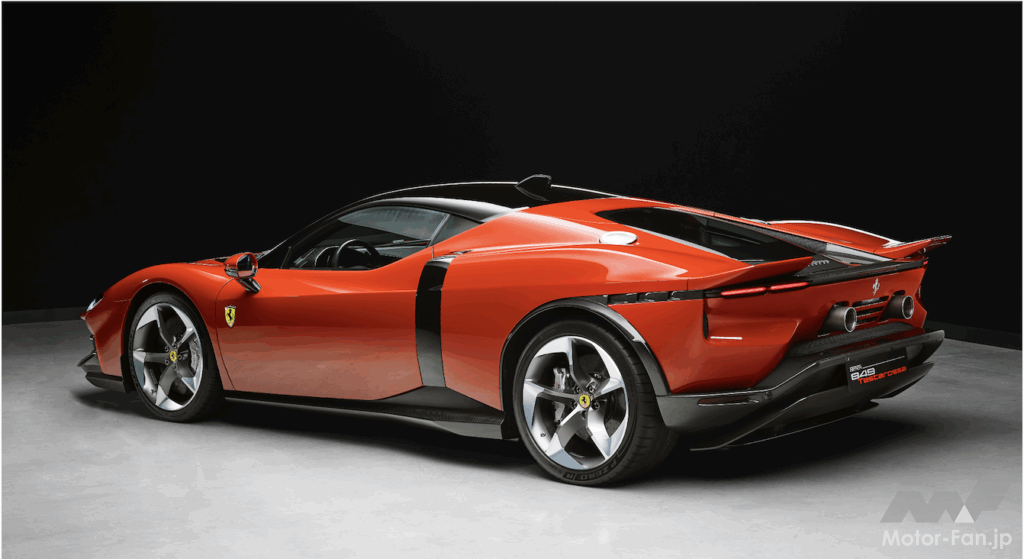
There is no disruption in the proportions. The line flowing rearward from the tinted black cabin area is beautifully executed, and the mid-engine silhouette clearly inherits the character of the SF90 Stradale.
Although the windshield is steeply raked, the opening line running from the A-pillar along the roof side maintains its relationship with the front axle, giving a strong impression of dynamic capability. The vehicle’s center of gravity is undoubtedly positioned in the optimal spot, and together with the mid-engine configuration, the engineering package can be perceived directly from the exterior form.
The sharp wedge character connecting the nose and tail is well-judged, while the powerful, swelling volume of the rear fenders overlaps with the curve of the cabin flowing from the roof as it passes the rear axle. At the very end, the tail fins cut upward through the car’s side profile, tightening the overall stance and at the same time evoking the exceptionally high performance embodied in this machine.

The black air intake that vertically bisects the side character line stands as the most iconic feature of the new 849 Testarossa. Ferrari refers to this as the “3D Livery.” Sculpturally deep ducts channel airflow into the side intake for enhanced aerodynamic performance, while the vertically oriented black element that frames it creates an exceptionally three-dimensional expression—merging function and form at the highest level. In fact, this configuration and intake design deliver a 30% increase in airflow compared with the F80.
It is truly astonishing that the beautifully finished, sculptural door was formed from a single sheet of aluminum alloy through hot pressing. Ferrari describes this as an expression of its unique craftsmanship—something that remains exclusive to Ferrari alone.
This three-dimensionally composed “3D Livery” can be described as architectural in nature, a fusion of technology and styling on the highest level. It represents a new expression of Ferrari design instilled into the 849 Testarossa by Flavio Manzoni and his team at the Centro Stile.

In the side view, the cabin zone—appearing dark with its tinted glass and black roof—together with the deeply sculpted air duct integrated into the door and the black vertical intake positioned just behind it, evokes the image of a jet fighter’s one-piece canopy merging into the fuselage side intakes. It is a symbolic design element that, while recalling Ferrari’s traditional identity, simultaneously pursues an expression of cutting-edge technological sophistication.
Front View
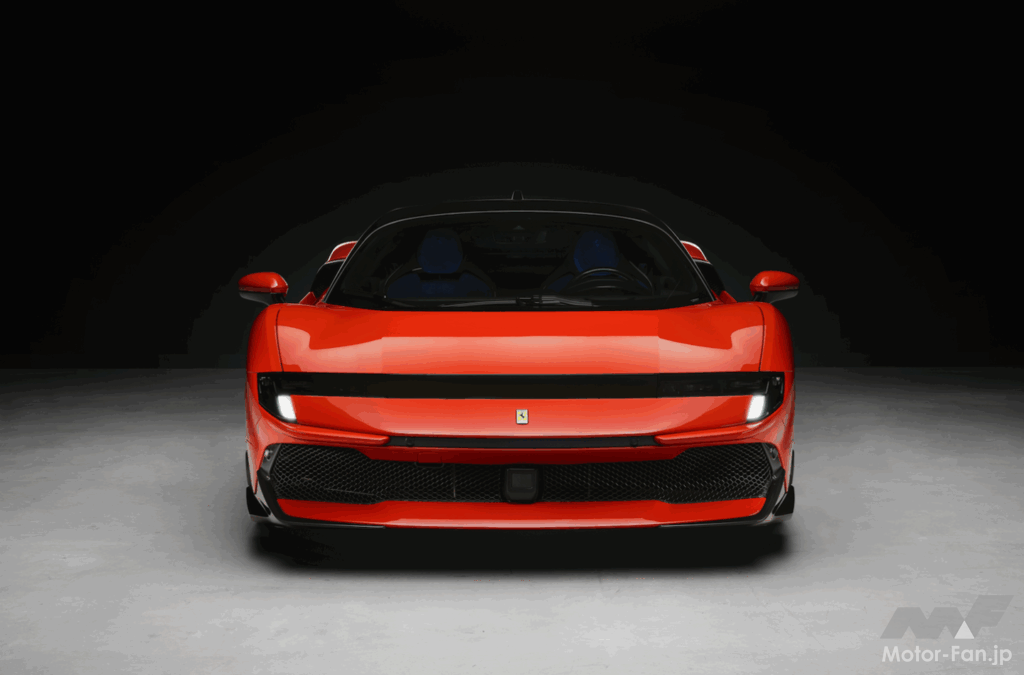
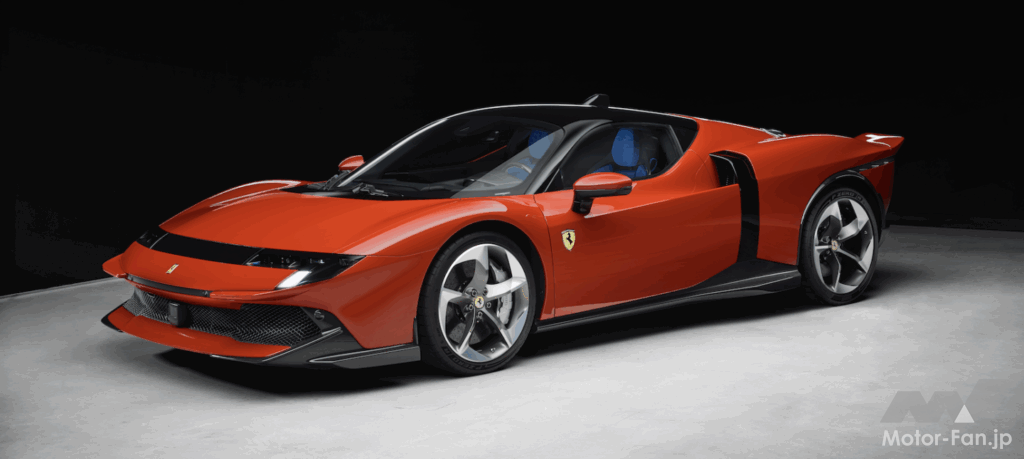
Objects that slice through the air and move at high speeds within the laws of physics naturally take on simple, smooth forms without irregularities. Likewise, the front fenders and the area around the hood of the 849 Testarossa are stripped of almost all emotional flourishes, resulting in surfaces of extreme smoothness. It feels as though Ferrari has deliberately expressed the car’s extraordinary performance in a geometric language befitting the digital era.
The visor-like horizontal lamp graphic, a theme carried over from the 12Cilindri and the F80, has been sharpened further. By extending around to the fenders, it visually transforms the nose into a single wing, creating the impression of two wide, layered spoilers at the front.In this way, the front end of the 849 Testarossa communicates an evolutionary design message.
Rear View
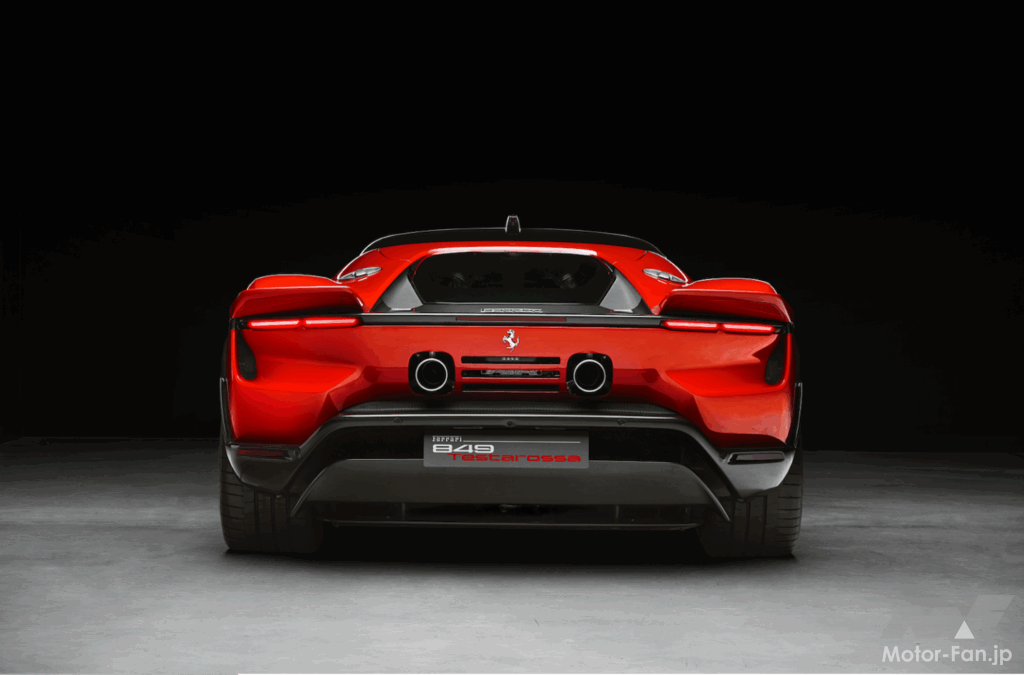
A defining feature is the twin active wings positioned on either side of the rear end. The tail lamps, now stretched into slim horizontal forms, embody an expression of evolution and transformation in step with advancing technology. For purists who regard four round lamps as the hallmark of Ferrari, this may come as a disappointment.The rear bumper, incorporating a full-width diffuser, stands as both proof of the 849 Testarossa’s performance and a statement of stability. While the twin round exhaust pipes preserve a signature Ferrari trait, the surrounding sculptural treatment carries a slightly different nuance from the rest of the design language—an aspect that draws attention.
PlanView
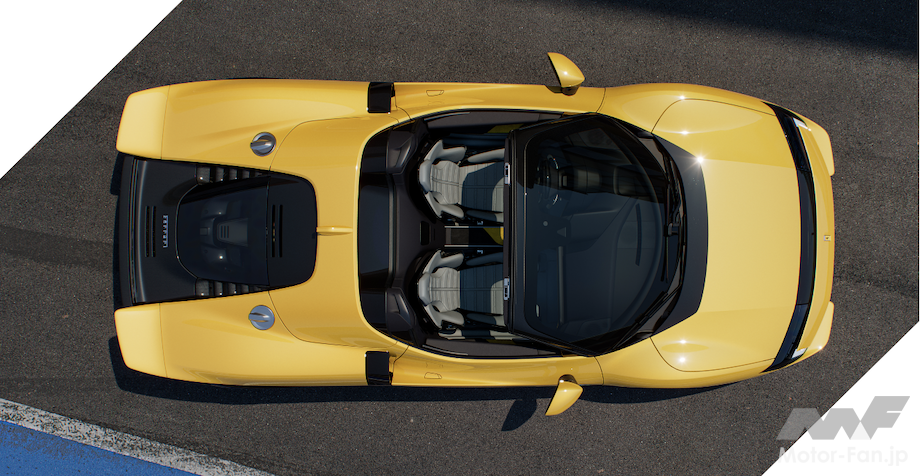
From the front wheels flows a graceful curve forward, while from the A-pillar emerges another exquisitely smooth arc that envelops the rear wheels. These surfaces are rendered with restrained transitions, resulting in a fluid, uninterrupted expression. At the same time, the airflow skimming over the front windshield and wrapping around both sides is channeled decisively toward the 3D Livery section.Furthermore, the trapezoidal form spanning the rear screen and extending into the twin tails represents a bold yet refined three-dimensional iconic expression—one that resonates with the design language of Ferrari’s most recent creations.
Interior Design
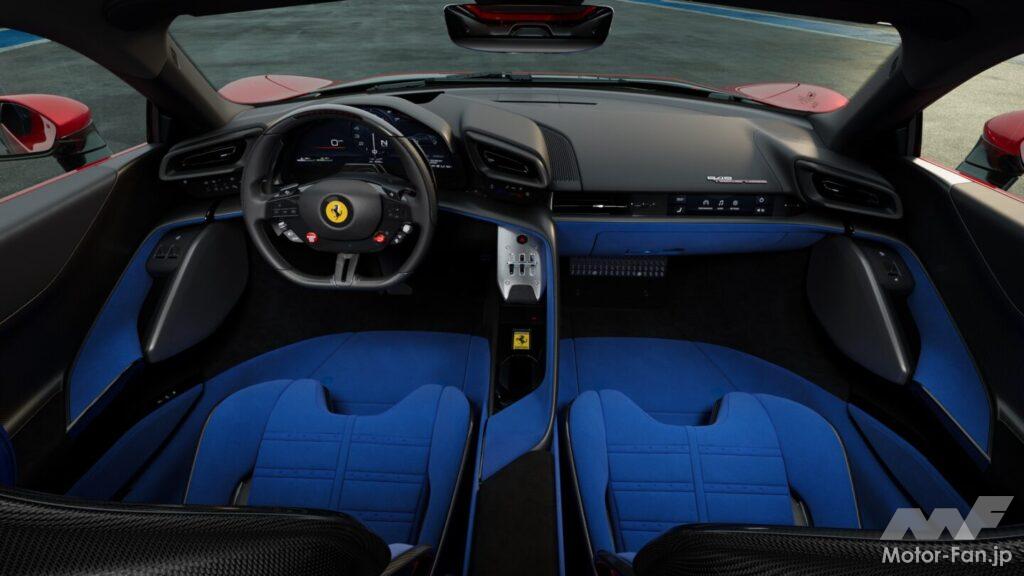
The horizontal dashboard is seamlessly integrated with the driver’s cockpit, its simple form ensuring an unobstructed field of vision. The distinctive partition design is echoed in the door trim, giving not only the driver but also the passenger a shared sense of the same ambience. The steering wheel and the surrounding controls have returned to physical switches—an approach that once again feels aligned with human sensitivity.
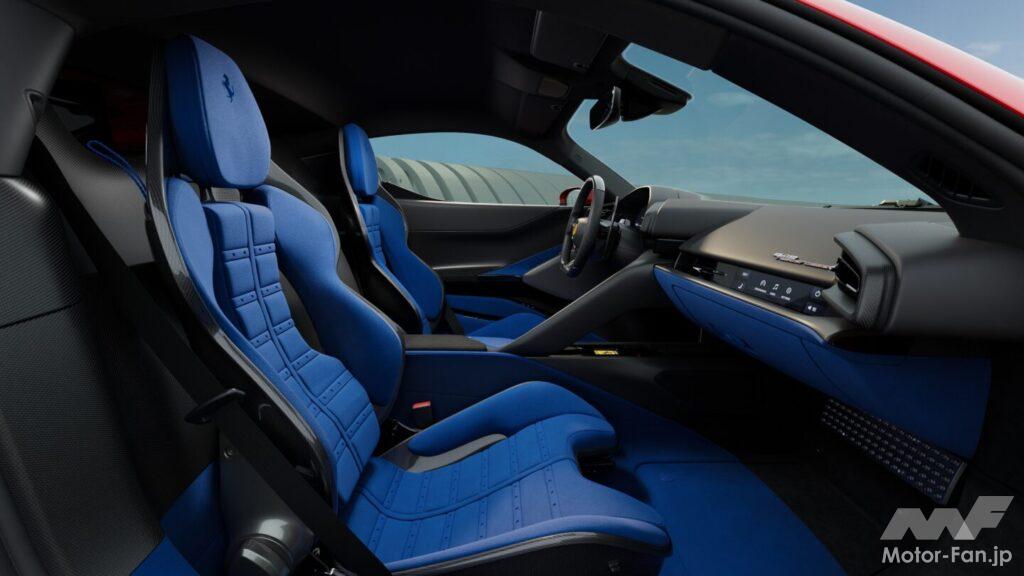
The coupe on display featured a beautifully finished blue interior. The seats were not overly tight, yet provided excellent support. While Alcantara upholstery itself needs little introduction, in this case the harmony with the exterior color highlighted the CMF designer’s refined sense of color and material design.
Ferrari Design:
An Interview with Flavio Manzoni
At the unveiling event, I had the opportunity to speak with Flavio Manzoni. Around the world, Ferrari fans each hold their own vision of what Ferrari should be, and expressions of “Ferrari-ness” often tend to focus on visible exterior details and motifs. How does Manzoni himself view these tendencies?In particular, I asked how the Centro Stile approached and advanced the design development of the new 849 Testarossa. The following is an excerpt from that extensive interview.
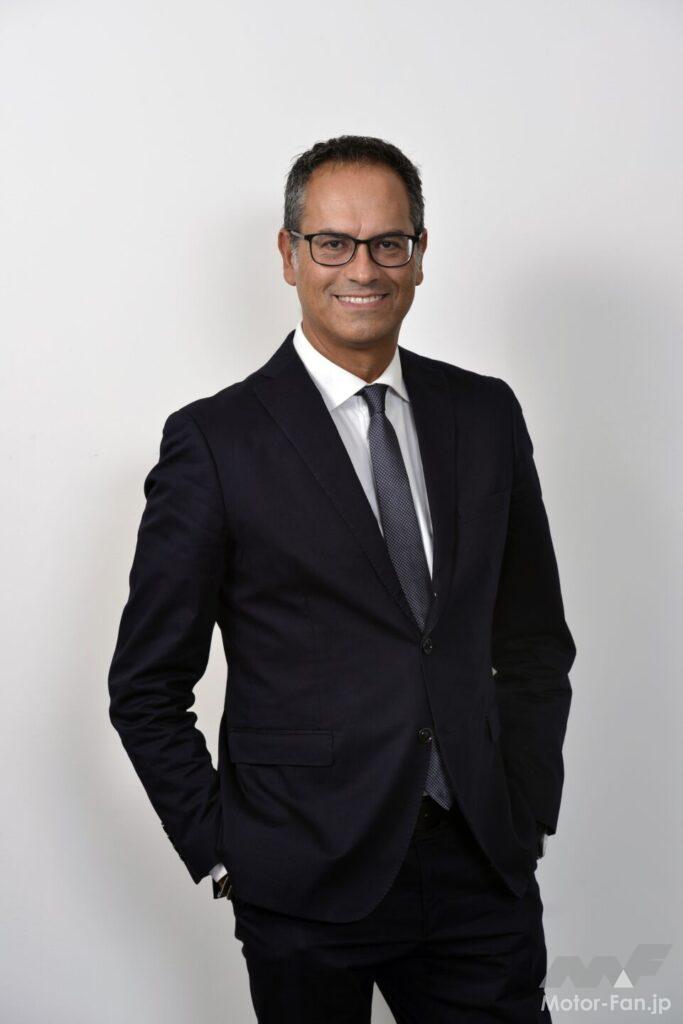
When we design a new car, we begin by carefully understanding the needs and then thinking about what forms are required to meet them. We also consider in depth what kind of concept is necessary. Every technical requirement must be addressed, and we devote great thought to the architecture of the volumes.
It is a very long process—spanning four years. But by doing so, we can ensure a true sense of overall coherence in the object. That is why we never simply focus on decoration or surface treatments alone.
When creating something new, we must also create new forms. If we were to rely only on past elements, it might please many people, but it would lack innovation—and with it, the timeless effect would be lost.
The 3D Livery embodies this philosophy. It consists of geometric elements while also being strongly three-dimensional. Livery carries a graphic aspect as well, and we wanted to combine it with the sculptural treatment of the door in a new way. For the double tail, we worked together with the aerodynamics team to find the right solution for this idea.
As a result, we achieved a highly original design language that harmonizes sculptural and graphic elements.
Beauty and technology are both essential to Ferrari. For me, Ferrari is a dream—a dream in which beauty and speed are inseparably connected.
(For the full interview, please look forward to Car Styling Vol.2, scheduled for release in December.)
カーデザインの関連記事


マツダEZ-6/マツダ6eが2026年「ワールド・カー・デザイン・オブ・ザ・イヤー」を受賞!


「100年を超えて輝き続ける宝石たち」世界最高峰のビスポークモデルを作り続ける「ロールス・ロイス」

1970年代キャメルGTチャレンジ参戦車両を現代に甦らせたワンオフ仕様「ポルシェ911S/T」登場

グラン・カナリア最高標高の村に着想を得た「ベントレーベンテイガ アルテナーラエディション」

![by Car Styling [カースタイリング]](https://motor-fan.jp/wp-content/uploads/2025/04/carstyling-jp_logo.png)
中国モデルメーカーの現状を見る。熾烈な競争を続ける中国自動車産業、その要を担うモデルメーカー_Part 2/上海SKY
