Three years since its establishment: GAC (Guangzhou Automobile Group)’s Milan studio is beginning to show results. / Lorenzo’s perspective Vol.9


Akio Lorenzo Oya, based in Siena, Italy, provides insights into Guangzhou Automobile Group Co., Ltd. (GAC Group)’s Advanced Design Studio, established in Milan in 2022 as the company’s first European development base following Guangzhou, Shanghai, and Los Angeles.
TEXT: Akio Lorenzo Oya
Photo : Akio Lorenzo OYA / GAC Design
Buongiorno!
This is Akio Lorenzo Oya, a Japan-based journalist living in Italy.
In this installment, I’ll report on the latest activities at GAC (Guangzhou Automobile Group)’s design studio in Milan, Italy.
From a Former Photographer’s Studio
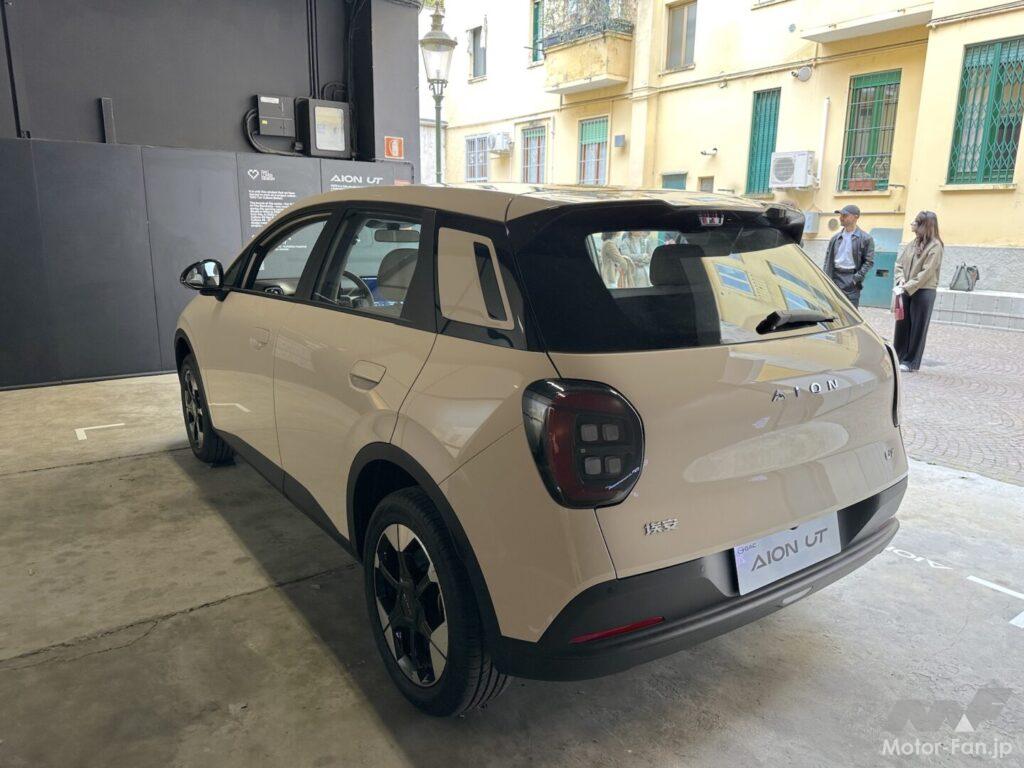
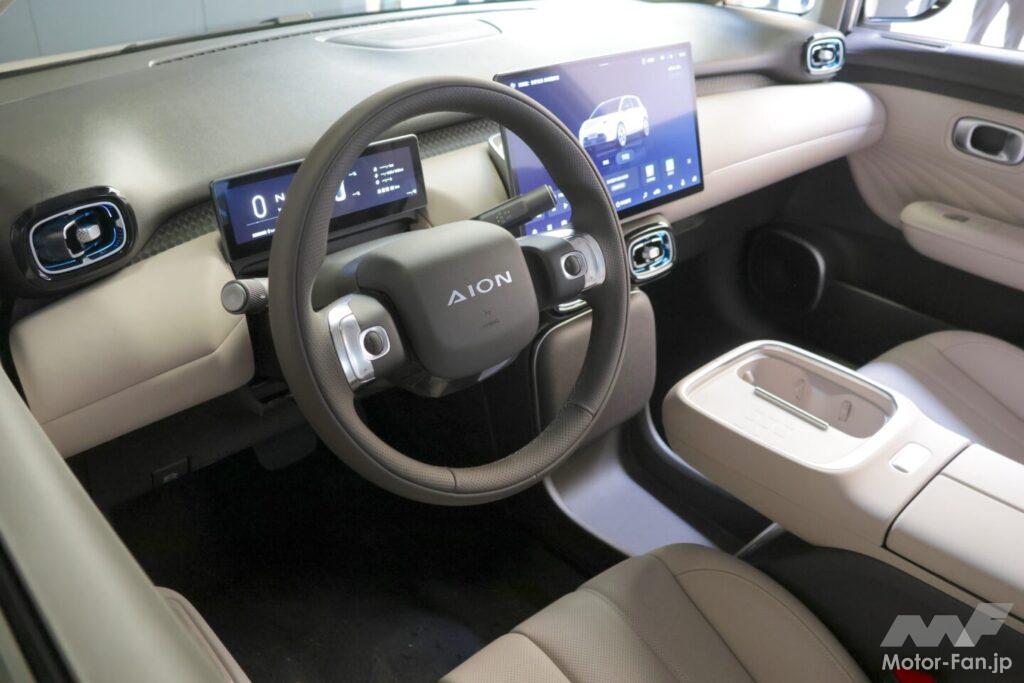
In July 2025, GAC signed a vehicle sales agreement with the UK dealer group Jameel Motors. As a result, GAC became the fourth Chinese brand to enter Europe’s second-largest automotive market. The models to be sold are both BEVs: the “Aion V” and the “Aion UT.” The latter’s design development was significantly supported by GAC’s design studio in Milan.

Let’s recap about GAC at the outset.
Its parent company, Guangzhou Automobile Group Co., Ltd. (known as GAC Group), is headquartered in Guangzhou, Guangdong Province, and traces its origins back to a bus repair business founded in 1954.
Over the years, the company moved into vehicle production, including Peugeot cars, and today it operates joint ventures with Honda, Toyota, andHino.
Within the group, its passenger car brands are:
GAC (Trumpchi / 传祺) – the domestic mainstream brand
Aion (埃安) – focused on environmentally friendly and new energy vehicles
Hyptech (昊鉑 / Hyptech) – positioned as the premium brand
They established the “GAC R&D Center” in 2006 in their home city of Guangzhou as the group’s dedicated research and development facility.
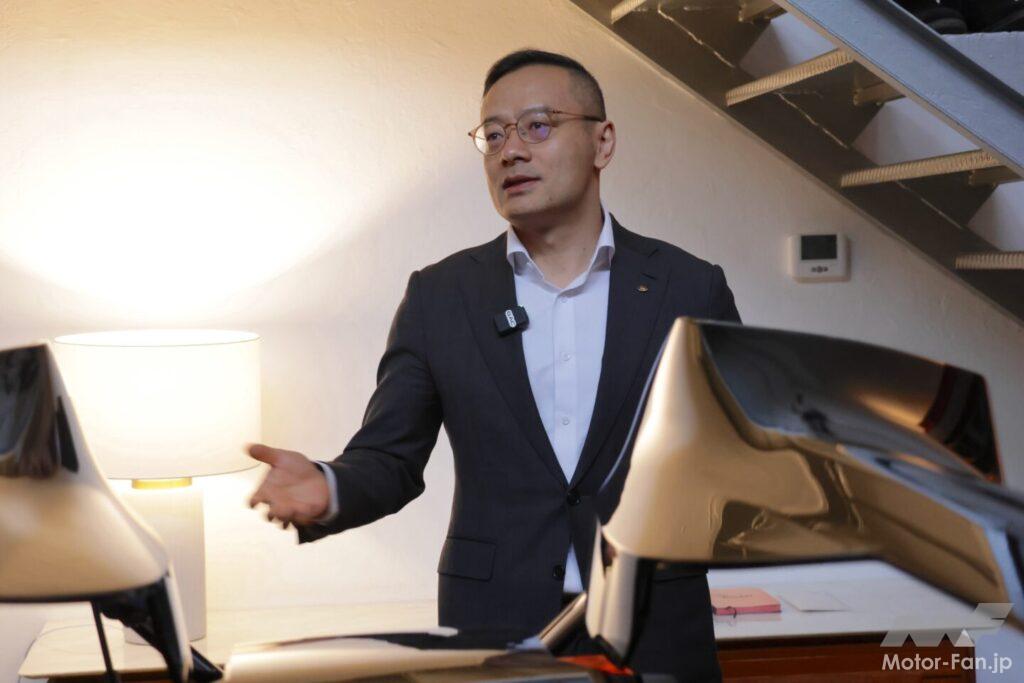
Mr. Fan Zhang, who serves as Vice President of the center and Head of Design, has a distinctive career path. Before joining GAC, in 2003, he became the first Chinese designer hired by Mercedes-Benz. This background highlights both his international design experience and the global perspective he has brought to GAC’s design leadership.
The “GAC R&D Center Europe” (hereafter referred to as GAC Design Milan) introduced here is an advanced design studio established in Milan in 2022 as the company’s first European development base. It follows the company’s other design centers in Guangzhou, Shanghai, and Los Angeles.
Located at Via Tortona 16, the symbolic design district of Milan, this studio occupies the premises once used by the late photographer Giovanni Gastel, who passed away in 2021.
When moving into the premises, GAC was asked by Mr. Gastel’s family to preserve the atmosphere in which he had worked and to safeguard his vast personal library. Respecting these conditions, the GAC staff added a café-style corner in one section of the studio.
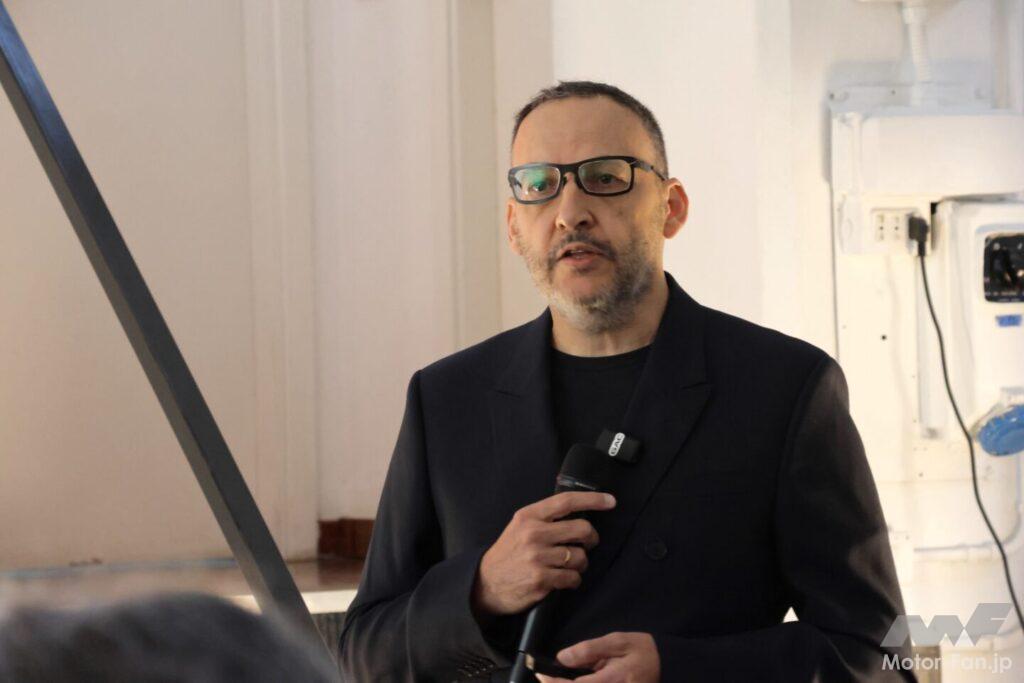
“Basically, here it’s all about the environment and the mood. The studio is like a home for us, a comfortable loft-like space. And our way of designing is the same—full of great energy,” said Janin in his presentation at the Milan Design Week 2025, which will be described later.
Due to space limitations, they cannot build full-scale 1:1 models. However, Project Manager Gao Sai explained to me that because there is a strong network of supplier companies in the surrounding area, design development can proceed smoothly—as if the facilities were available in-house.

The latest work is a “reinterpretation of the 1930s.”
Since its opening, GAC Design Milan has embraced the motto “GAC Love Design” and opened its facilities during Milan Design Week. At the same time, it has explored European automotive culture and presented its reinterpretations through the “Car Culture Series” concept cars, unveiled both as full-scale and scale models.
The “#1 Barchetta” of 2022 was inspired by Italian sports models from before World War II. The following year, 2023, saw the “#2 Van Life,” which envisioned a nomadic lifestyle made possible by automobiles.
In 2024, the “#3 City_Pod” drew inspiration from the legendary microcar BMW Isetta, while the “#3 City_Box” was influenced by the Italian light three-wheeled truck Piaggio Ape.
Mr. Janin explains: “These are meant to share that philosophy with young designers and with people who are interested in this field.”
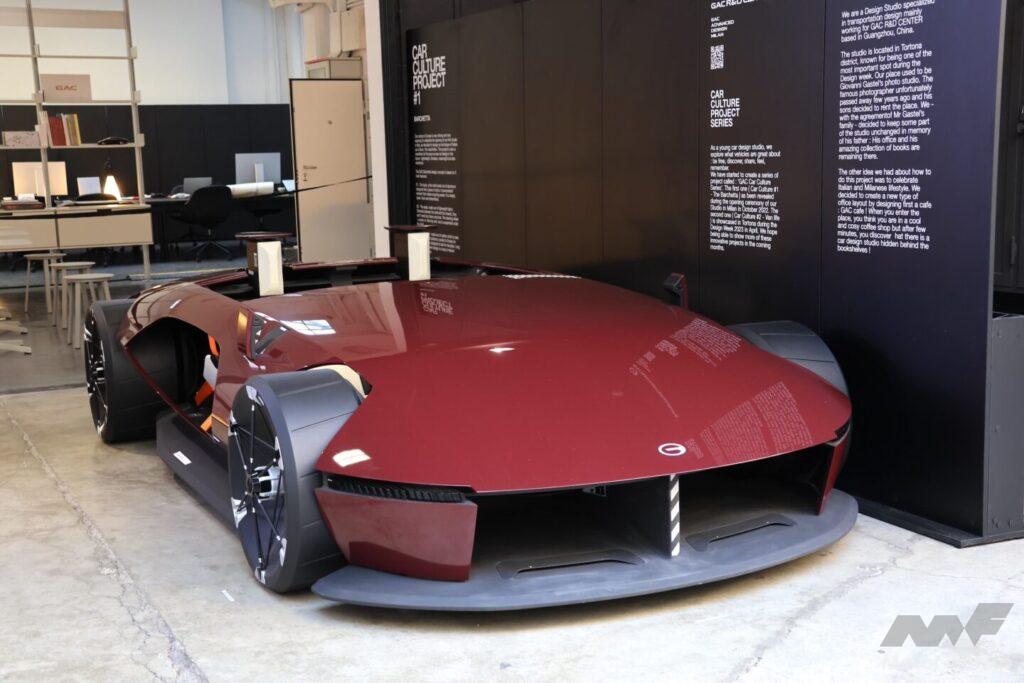
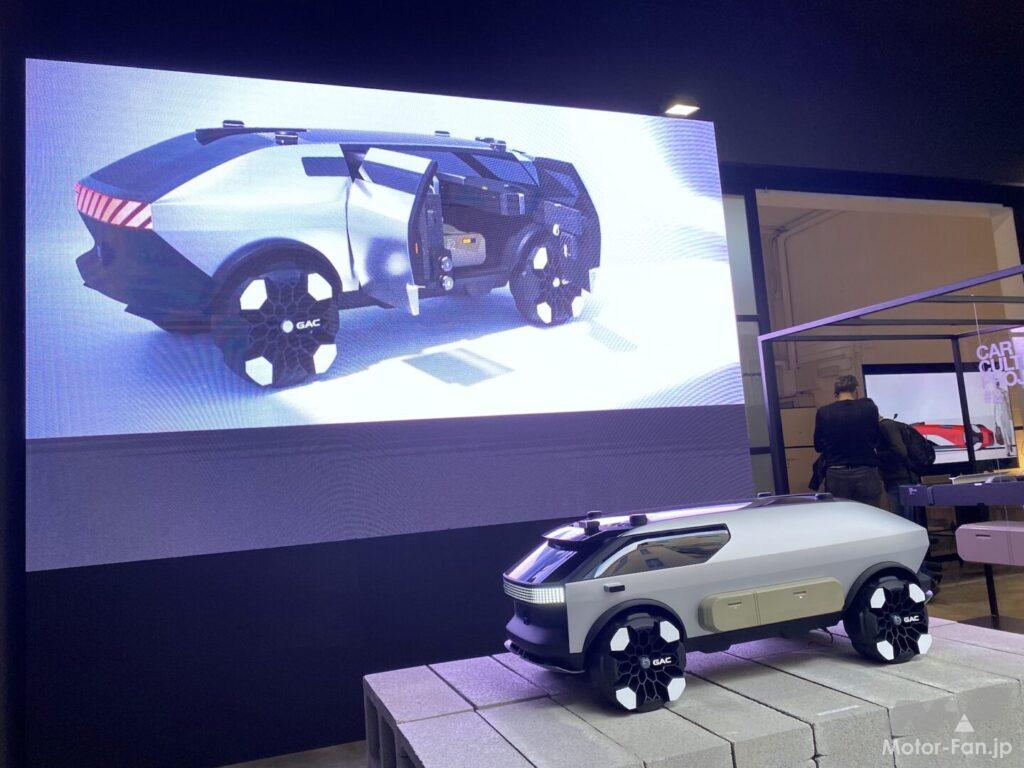
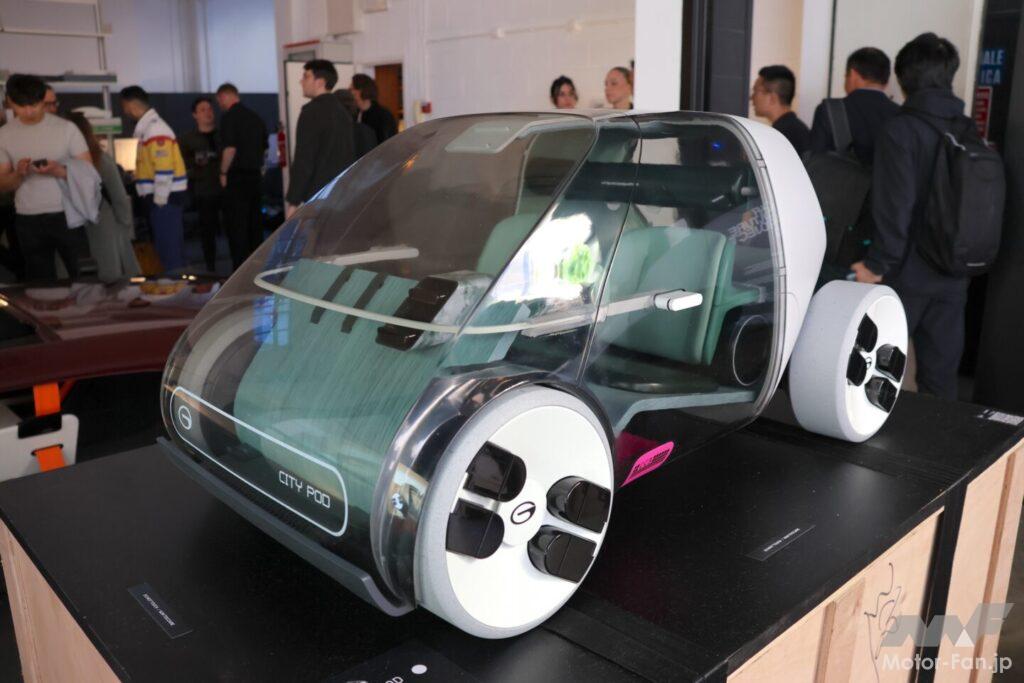
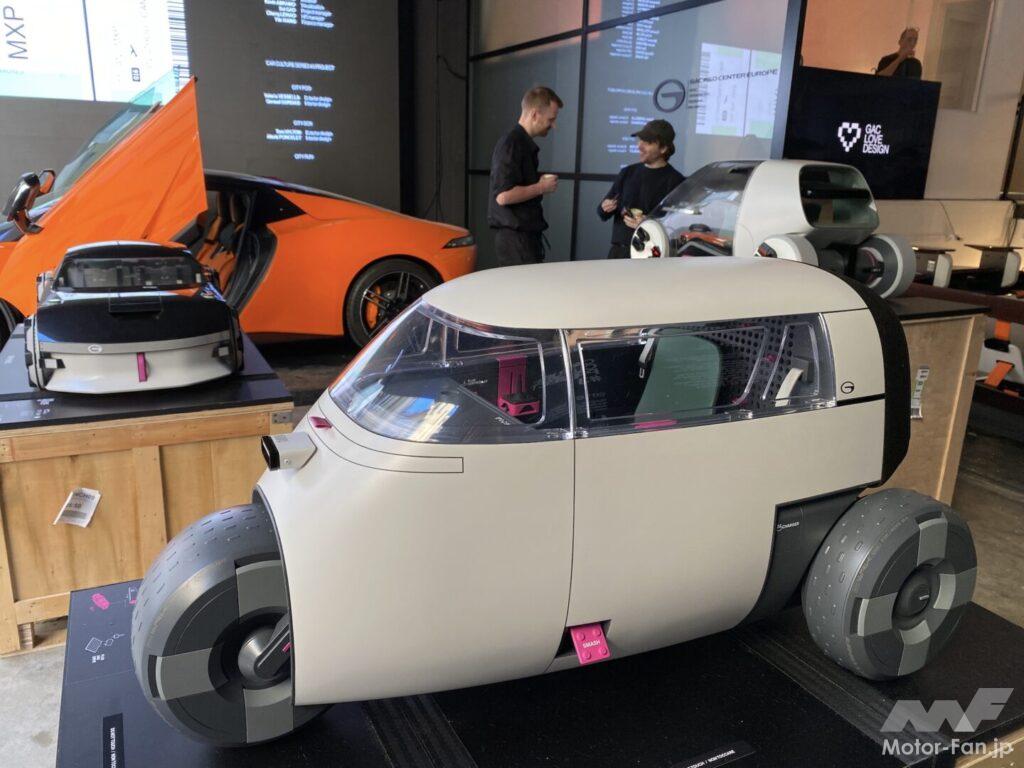
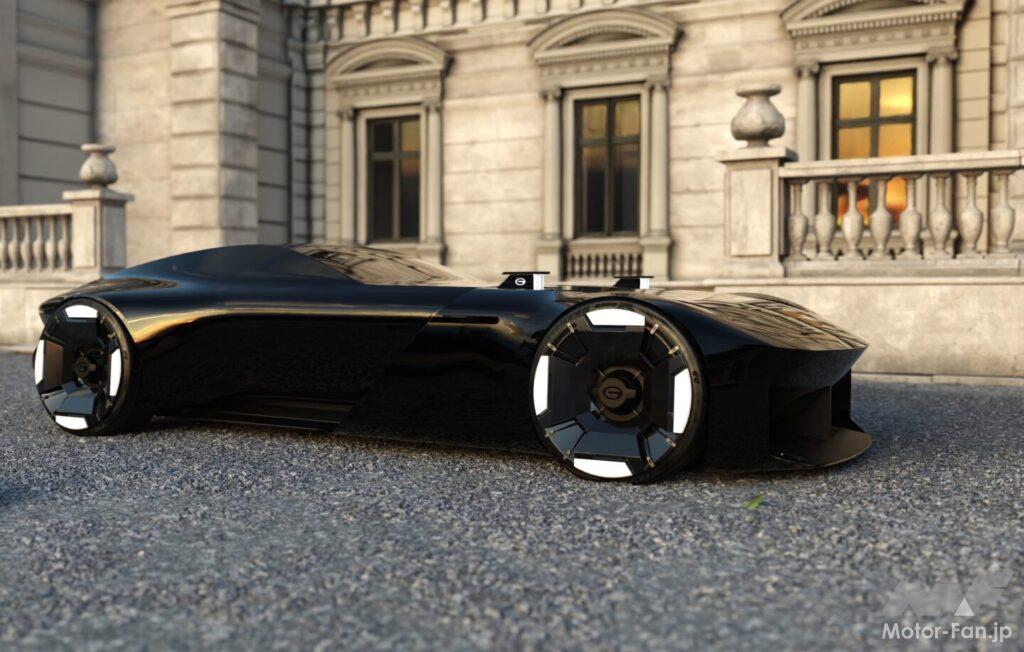
And the latest creation, unveiled in April 2025, was the “#4 Hyper Luxury.”
Its source of inspiration was the automotive culture of the 1930s.
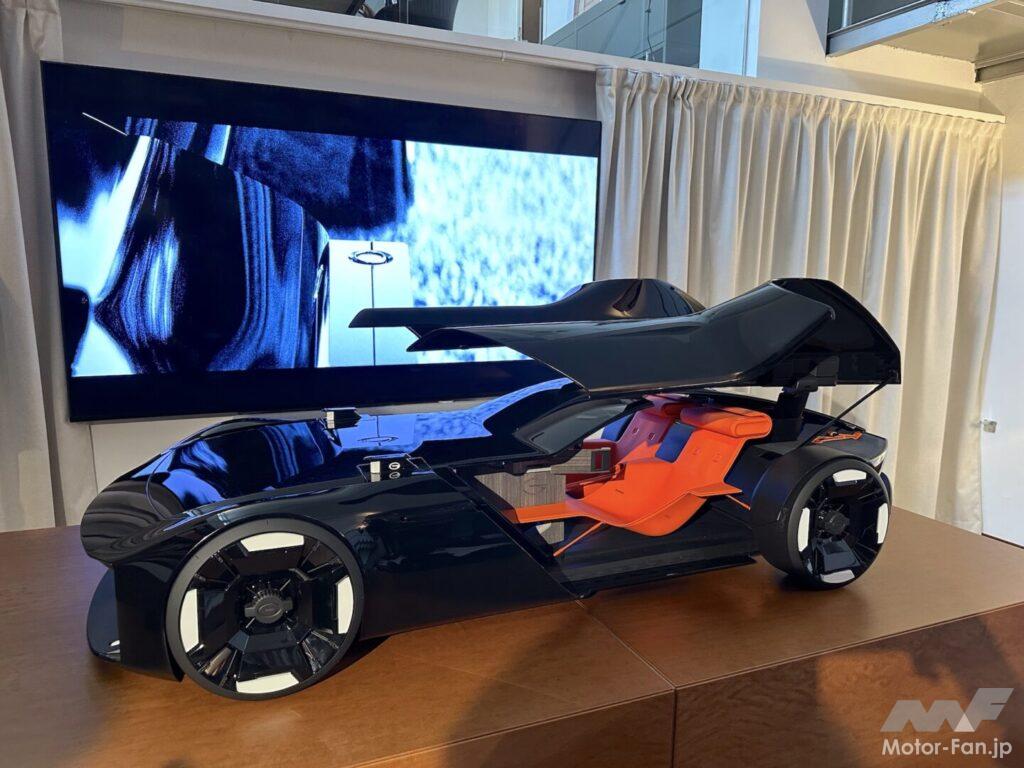
At the press conference on April 8, Mr. Janin prefaced his remarks by saying, “Of course, this is very conceptual and not something that will be realized tomorrow.” At the same time, he explained, “Our focus was not on imitating the luxury brands of that era, but on understanding their mindset and spirit.”
For this latest creation, the GAC Milan Design staff took as their model the Bugatti Type 57 Atlantic, built in the 1930s.
They recalled that at the core of their thinking was the principle of “Analog” and the stance of “No AI,” meaning a deliberate refusal to depend on artificial intelligence.
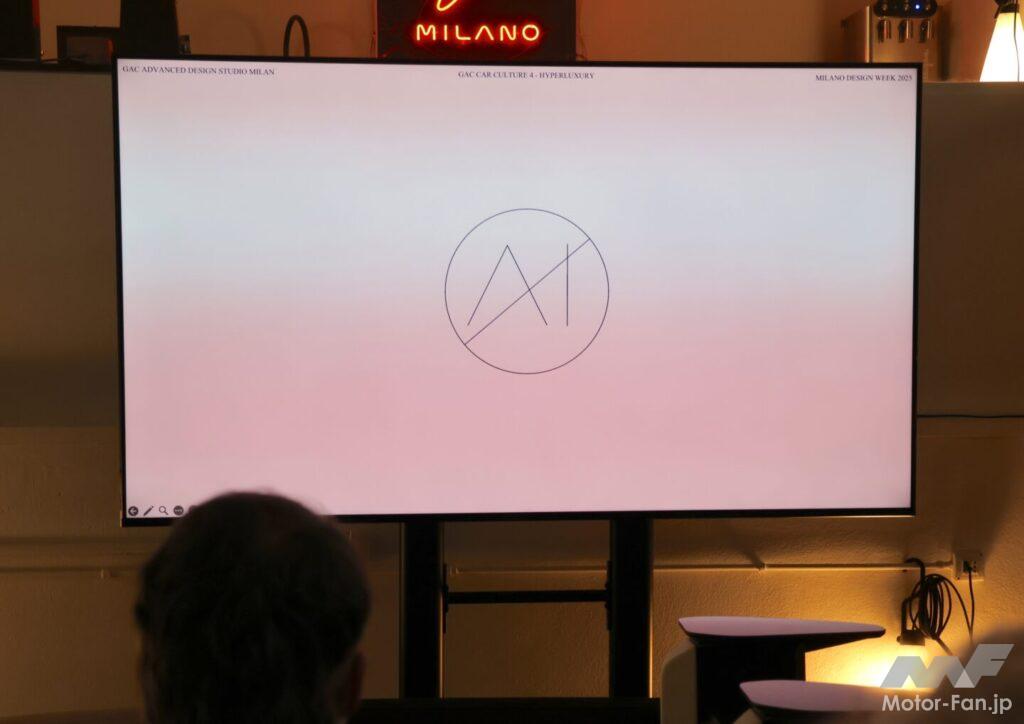
Interestingly, at the same event, GAC Design also announced a design award it is organizing, open to public entries. In contrast, the theme of that competition was set as “how to make use of AI.” This juxtaposition highlighted the dual perspectives: the studio’s own conceptual exploration rooted in analog thinking and human creativity, and, on the other hand, an open challenge to designers worldwide to creatively leverage artificial intelligence.

In addition, Mr. Janin quoted Coco Chanel’s words: “Fashion changes, but style is eternal.” He reflected, “Her simple black dress and jewelry still look modern even today.”
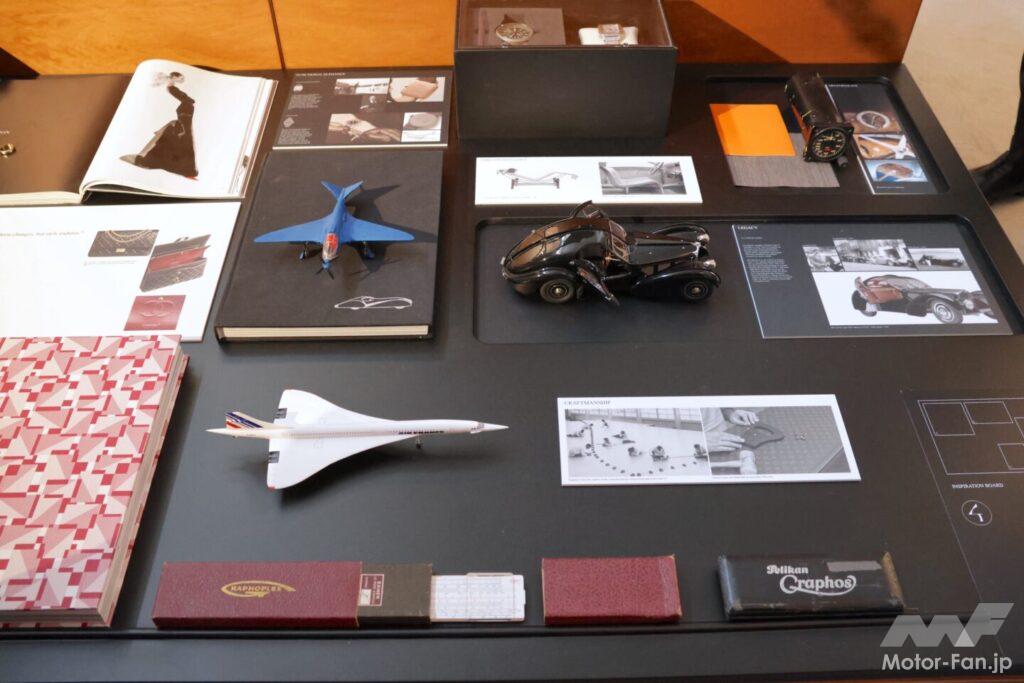
He also projected slides of photographs taken in France in the 1930s during automobile journeys, commenting: “It was by no means comfortable, but at that time the ultimate luxury was to drive to the South of France and enjoy the scenery.”
In other words, the car was a tool to explore the world, to sense its smells, and to create memorable experiences.
A Dynamic Sense of Effortless Luxury
After the press conference, I had a chance to speak with Mr. Fan Zhang.
He told me, “Throughout the history of European automobiles, there are countless masterpieces from which we can draw inspiration. By studying their proportions — the balance of each body element — we can reinterpret and recreate them.”
At the same time, he emphasized, “What truly matters is how we make use of today’s technology to create new masterpieces.”
The #4’s proportions feature a relatively short rear deck.
I asked Mr. Zhang, “In classic luxury car design, a long-tail layout has often been the established formula — why not that approach?”
He responded by citing examples such as Rolls-Royce, Maybach, and the legendary Mercedes-Benz 500K:
“The long tail does look very elegant,” he noted, “but it can sometimes feel a bit heavy.”He then continued,
“For the #4 Ultra Luxury, Stephan and his team chose a long nose instead of a long tail, which gives the car an elegant yet sporty and powerful impression. By shortening the rear overhang, they succeeded in bringing more dynamism and a sense of lightness to the overall form. This kind of proportion, too, is one possible direction for a luxury car.”

The keyword “lightness,” mentioned by Mr. Fan Zhang, was also reflected in the interior.
Mr. Janan explained, “To me, luxury is not about owning something heavy or expensive.”
To embody that philosophy in the seats, the team drew inspiration from the 1929 Chaise Longue LC4, a creation by the modernist architect Le Corbusier and his disciple Charlotte Perriand.
“At that time,” Janan continued, “luxury was defined by simplicity and lightness — as if the object were gently floating within the room.”
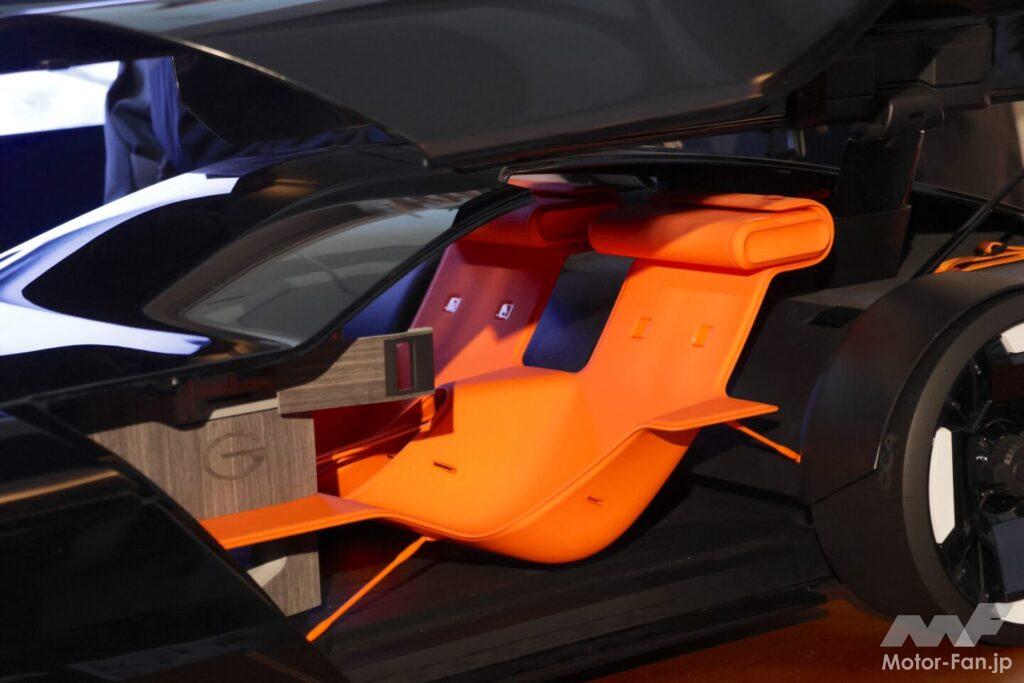
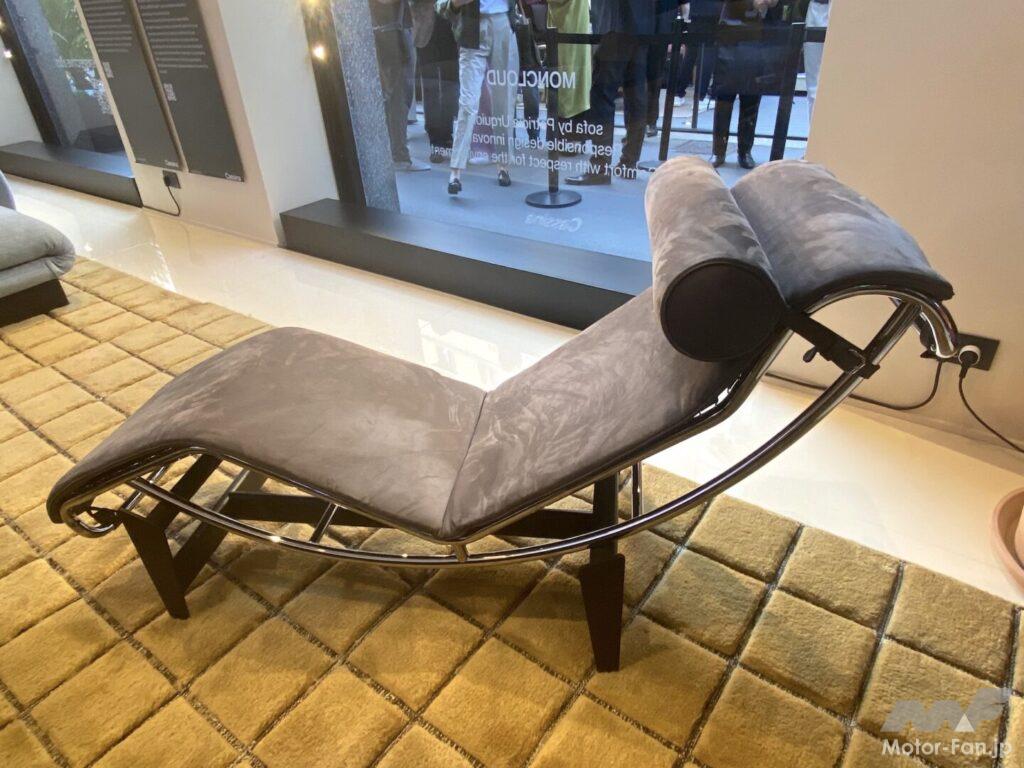
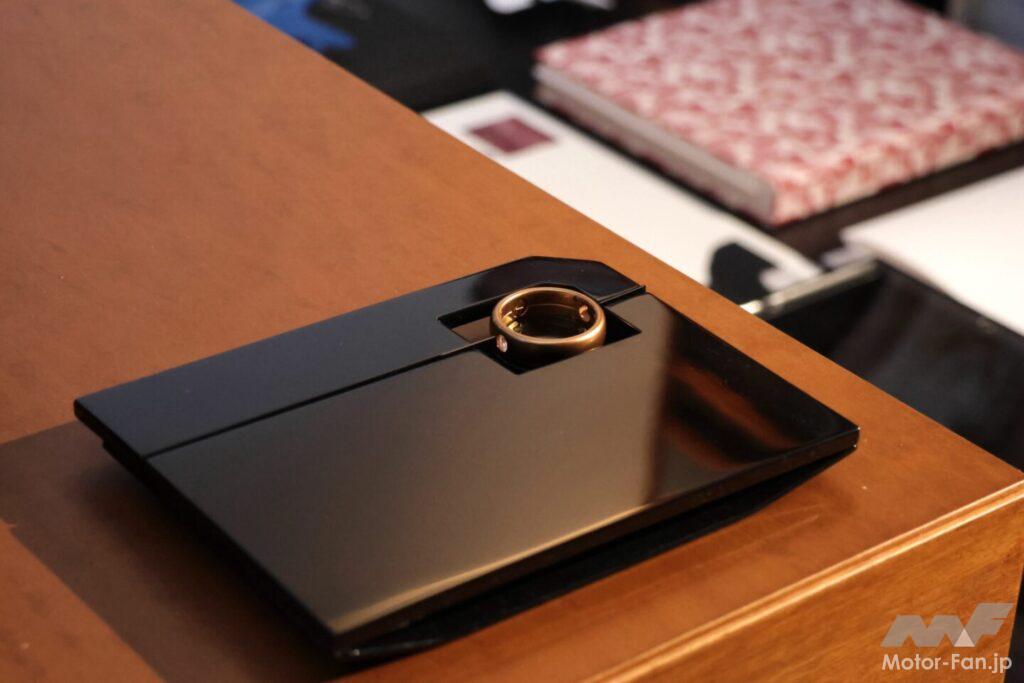
It’s a way to emphasize the idea of “connection” — both visually and emotionally.
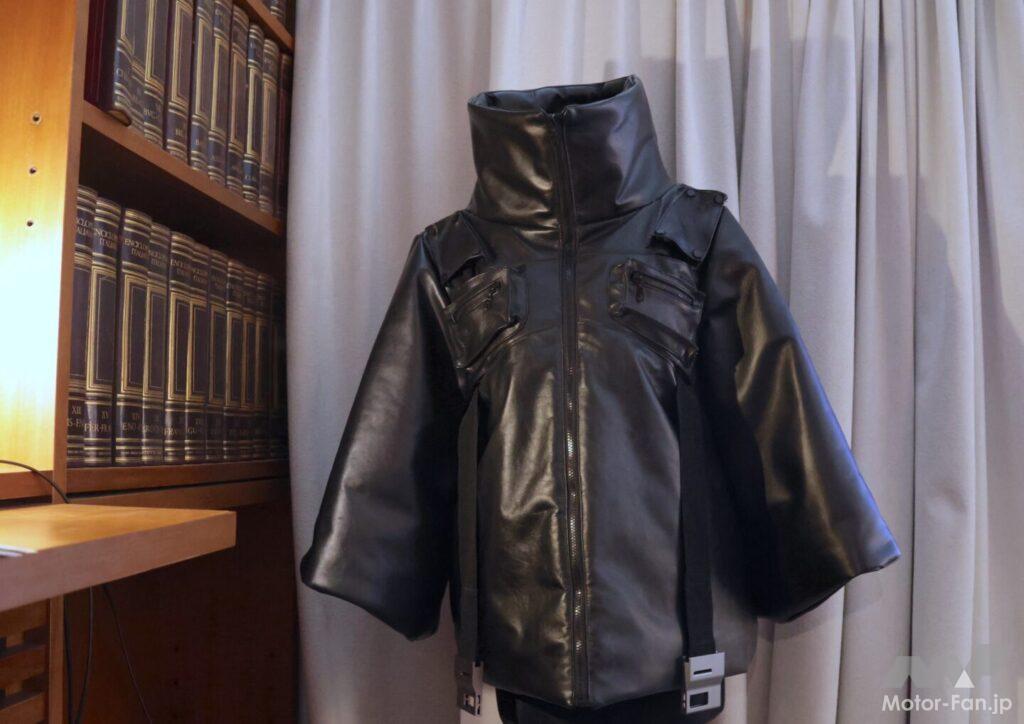
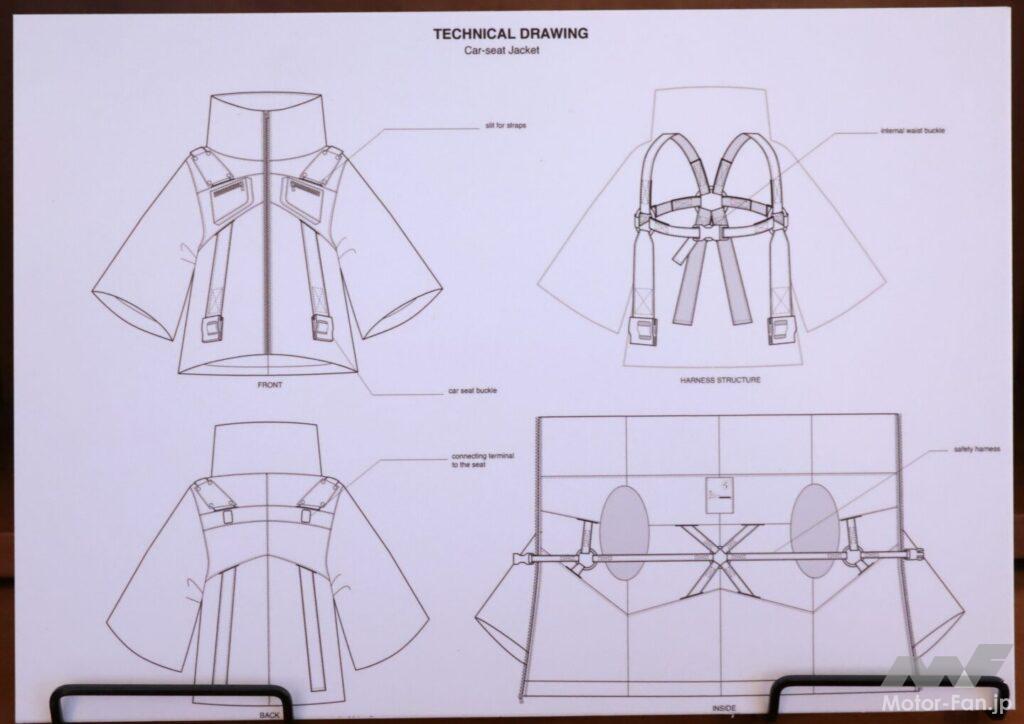
The interior also introduces what the team calls the “Car Seat Jacket.”
“In the 1930s, automobile travel was not very comfortable,” Janan explains. “The occupants’ clothing served to protect them from stones and rain — in a sense, it was part of the vehicle itself. At the same time, it represented a new form of elegance. So we thought about creating garments that would feel integrated with the car.”
The Car Seat Jacket is a groundbreaking idea in which the driver’s clothing incorporates functions such as heating, cooling, and even certain safety elements like the seat belt.
“As a result,” Janan adds, “the seat itself can be designed in a very simple and minimal way.”
A Standout Among Automotive Exhibits
The research and development efforts of GAC Milan Design are gradually bearing fruit.
Their first concept car designed by the exterior team — the 2023 GAC ERA — was honored with an iF Design Award in the spring of 2025.
The knowledge and experience gained through that project are clearly reflected in the Aion UT, introduced at the beginning of this article.
At Milan Design Week 2025, there were around 20 automotive-related brands participating, as far as I could confirm.
Among them, GAC Milan Design’s approach stood out as perhaps the clearest expression of what a brand truly wants to communicate.
And with that — arrivederci, until next time!
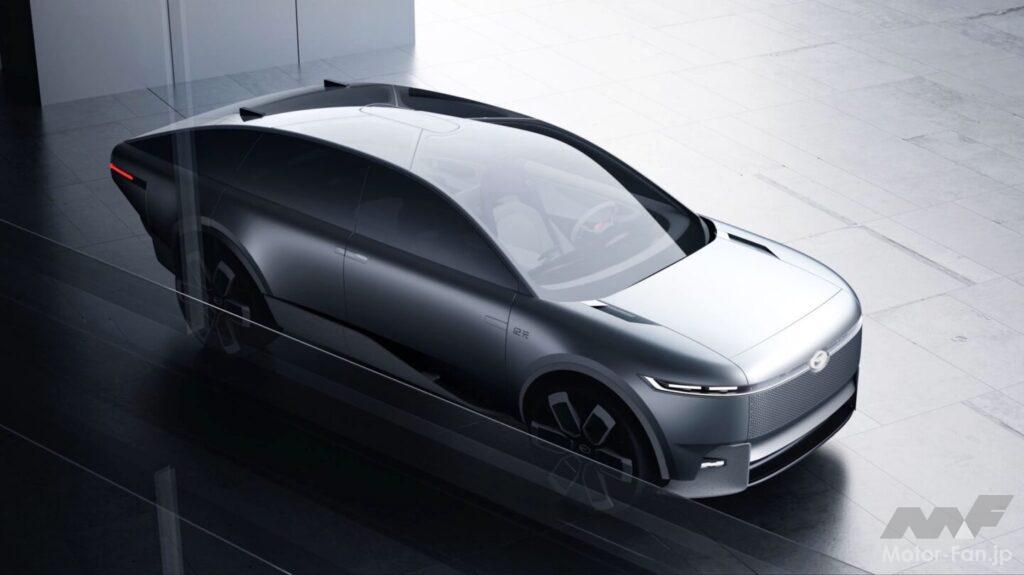
Right after the Milan event, the designers headed to Berlin to attend the award ceremony.
カーデザインの関連記事


グラン・カナリア最高標高の村に着想を得た「ベントレーベンテイガ アルテナーラエディション」

![by Car Styling [カースタイリング]](https://motor-fan.jp/wp-content/uploads/2025/04/carstyling-jp_logo.png)
中国モデルメーカーの現状を見る。熾烈な競争を続ける中国自動車産業、その要を担うモデルメーカー_Part 2/上海SKY

中国モデルメーカーの現状を見る。熾烈な競争を続ける中国自動車産業、その要を担うモデルメーカー_Part 1_MOTIVO

The Design of HONDA’s Electric Motorcycle “EV OUTLIER Concept”

HONDAの電動バイク”EV OUTLIER Concept”のデザイン

