A Geneva Concept Car from 10 Years Ago Revives in Virtual Grand Prix / Lorenzo’s perspective Vol.10


A story of a new e-motorsports vision created by ED Torq, a virtual machine born from a real concept car exhibited at a motor show.
TEXT : Akio Lorenzo Oya
Photo : ED Torq

Buongiorno! I’m Akio Lorenzo Oya, a journalist based in Italy.
When we think of concept cars, in stark contrast to their glamorous spotlight at shows, in later years they end up stored in warehouses or, due to various circumstances, meet the unfortunate fate of being dismantled. Today, however, such developments can take a different turn, as this story illustrates.
The Trajectory of Phygital
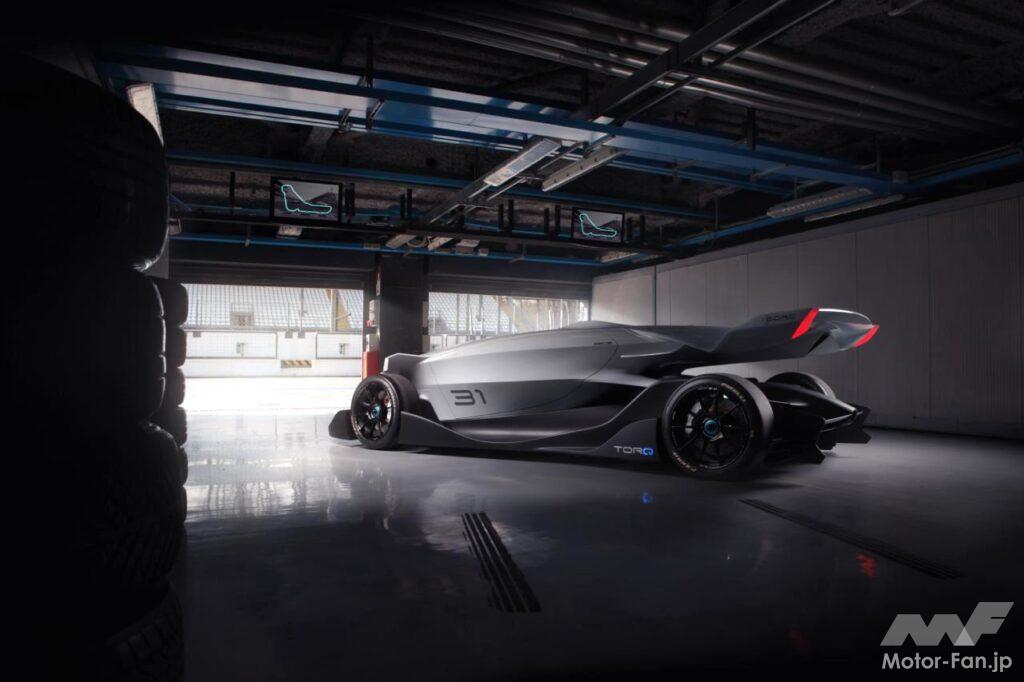
Do readers recall the concept car “ED Torq” displayed at the 2015 Geneva Motor Show? It was a mockup of an electric race car designed for fully autonomous driving, featuring a bold proposal: instead of conventional windows, the driver would maintain visibility through interior screens linked to exterior cameras. It was created by ED (Excellence Design), a Turin-based design laboratory led by David Pizzorno. For reference, the theme they advocated was MAAL (Mobile Autonomous Automotive Laboratory)—a contemporary version of the long-used phrase “rolling laboratory.”

After its Geneva Show display, ED Torq began a unique journey. ED entered into a licensing agreement with French gaming software company Gameloft. As a result, from 2016, ED Torq appeared in the company’s “Asphalt series” video games. When that Gameloft contract ended in 2025, ED independently launched what we introduce here: the new virtual version of ED Torq. Born physically and grown digitally, ED describes it with the coined term “Phygital.”
The Expanding World of SIM Racing
The virtual version of ED Torq will be used in their newly launched esports. First, let’s briefly review esports. It’s short for Electronic Sports, where players or teams compete in virtual spaces simulating real racing environments for prize money and positions. Fighting games, weapon-based survival, and soccer are well-known genres. Professional players, leagues, and championships already exist.
Motorsports-related ones are called race simulation or SIM racing (Simulation Motorsports Racing). They’re conducted using specialized software represented by “Gran Turismo,” “Assetto Corsa,” and “iRacing,” combined with simulation hardware. Through advanced physics engines, graphics, and immersive simulator technologies like VR and multi-displays, they’re establishing a special position within esports.

As professional SIM racing, the “eNASCAR iRacing Series” was founded in 2010, and the “Formula 1 esports Series” in 2017. Moreover, exceptional players sometimes transition to real racing. For instance, Britain’s Jann Mardenborough started with Gran Turismo’s real driver development course and transitioned to become a GT World Challenge Europe competitor.
ED Torq Grand Prix
Let’s return to ED Torq. As mentioned, their current 2025 plan is a Grand Prix race using virtual ED Torq. While PlayStation examples exist of running concept cars from renowned design firms like Pininfarina in games, in ED’s case, they organize both the platform and vehicles. In real automobile racing terms, it’s close to a one-make race.
ED analyzes that existing e-motorsports, though exploring NFT integration, remain limited. In traditional real motorsports, fans merely purchase tickets, with organizers and sponsors enjoying profits. In contrast, the ED Torq Grand Prix allows fans who purchase tokens called “Qoin” on the website to participate in governance and share rewards with organizations and teams.

For this article, Giuseppe Zambelli Rain, one of seven preparation members, explained the concept. “The project is based on ‘Web3.0,’ the next-generation internet. Web3.0, closely tied to token economies and blockchain, offers the advantage of lower costs through decentralized management (where individuals become primary administrators rather than registering information on specific company servers).”
The recommended environment includes 16GB main memory, Intel Core i7 processor, and NVIDIA GeForce 2060RTX graphics board. “In other words, standard configurations suffice for participation. Both software and hardware basic setups will be testable in initial stages. Once all tests complete, access to the full game becomes available.”

Rain then explained participation methods. “The project is essentially supported by participants. Creating an account on the website allows downloading simulation software even with minimal Qoin holdings.” He continued: “Forming teams with other participants enables race entry.” Depending on skill, promotion to professional-level Grand Prix is possible, opening paths to compete with FIA (Fédération Internationale de l’Automobile) licensed drivers.
The revenue distribution system allocates 45% to Qoin holders, 45% to virtual vehicle owners, and 10% to organizers.
Birth of Next-Generation Gentleman Drivers?
The current roadmap indicates Grand Prix Season 1 qualifiers in 2025, the main event in Q1 2026, preparation for sponsors and professional drivers in Q2, and professional-level Grand Prix Season 1 in Q3.
Looking back at automotive history’s dawn, possibilities of becoming racing drivers were far lower than today. Gentleman drivers—wealthy automotive enthusiasts who competed equally with professional drivers—exemplify this well.

Rally had even lower barriers. In Italy, where I live, I still frequently meet people who once drove their own cars to knock on private team doors and became dedicated drivers.
What path ED Torq will follow remains unknown. However, if the vision proceeds as planned, the boundary between amateurs and professionals in the virtual realm may lower, potentially birthing gentleman drivers of the web era.
Well then, everyone, arrivederci until next time!
カーデザインの関連記事


グラン・カナリア最高標高の村に着想を得た「ベントレーベンテイガ アルテナーラエディション」

![by Car Styling [カースタイリング]](https://motor-fan.jp/wp-content/uploads/2025/04/carstyling-jp_logo.png)
中国モデルメーカーの現状を見る。熾烈な競争を続ける中国自動車産業、その要を担うモデルメーカー_Part 2/上海SKY

中国モデルメーカーの現状を見る。熾烈な競争を続ける中国自動車産業、その要を担うモデルメーカー_Part 1_MOTIVO

The Design of HONDA’s Electric Motorcycle “EV OUTLIER Concept”

HONDAの電動バイク”EV OUTLIER Concept”のデザイン

