Volvo’s flagship electric vehicles, the Volvo ES90 and the Volvo EX90, have made their debut.



TEXT: Osamu Namba
PHOTOS: Osamu Namba / Volvo
Introducing Volvo’s two next-generation flagship EVs, newly launched in the Japanese market.
Although the Volvo ES90 looks like a sedan at first sight, it is in fact a five-door hatchback crossover SUV with more than 175 mm of ground clearance. Air-suspension-equipped models can also be lifted by a further 40 mm. The Volvo EX90, meanwhile, is a large three-row, seven-seat SUV with an overall length of 5,030 mm. Both vehicles are defined by smooth, expansive surfacing, and their flush-mounted side windows lend them a clean and premium look. Below are our styling impressions of the two models as viewed from a typical dealership showroom distance.
Volvo ES90
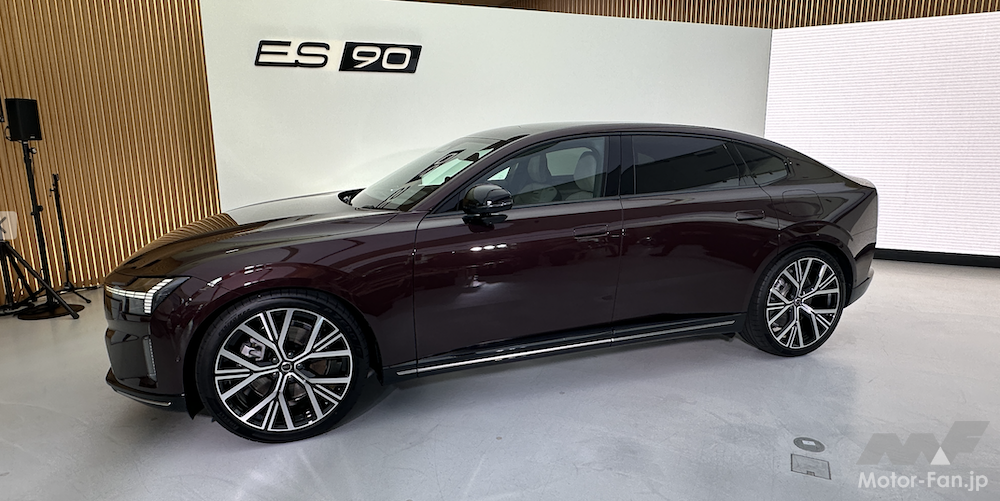
The side treatment is quintessentially Volvo, characterized by a crisp shoulder line that sweeps uninterrupted from nose to tail, creating a clean and fluid bodyside. Flush glazing extends all the way to the rear quarter window, while the retractable flush door handles further emphasize the vehicle’s refined execution and contemporary EV identity. The projected line of the A-pillar falls neatly on the front axle centerline, adhering to Volvo’s enduring philosophy of balanced proportions.
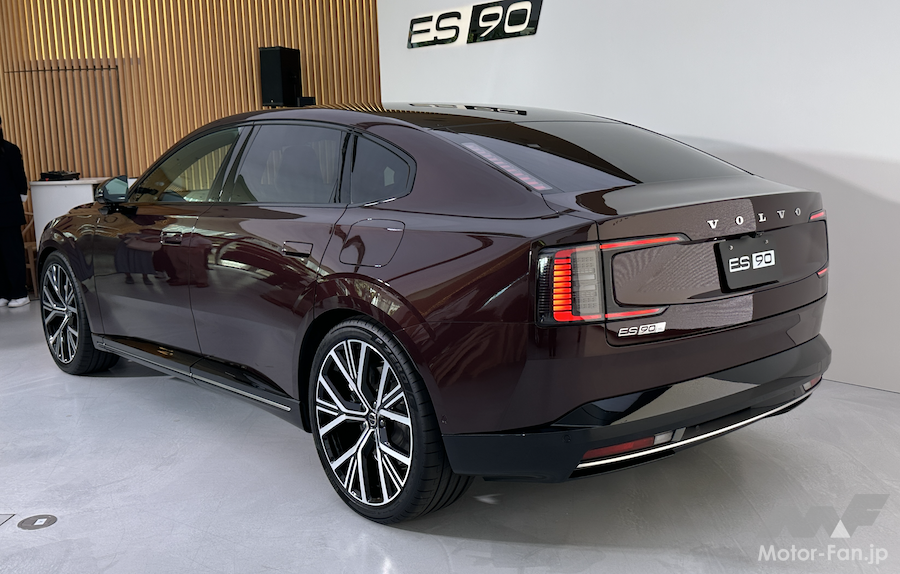
Its dimensions are substantial—5,000 mm in overall length, 1,940 mm in width, and 1,555 mm in height—but the combination of large-diameter wheels and tires gives the ES90 well-balanced proportions, preventing it from appearing bulky or heavy.
The black lower-body cladding, typically used to visually reduce the thickness of the body, is applied with notable restraint on the ES90. It perfectly suits the car’s positioning as a crossover, and this understated treatment is quintessentially Volvo.
At the front, Volvo’s signature Thor’s Hammer headlights establish the brand identity, while the rear is defined by distinctive C-shaped taillights. The sculpted, scooped contours running along both sides of the hood further reinforce the unmistakable Volvo design language.
NTERIOR
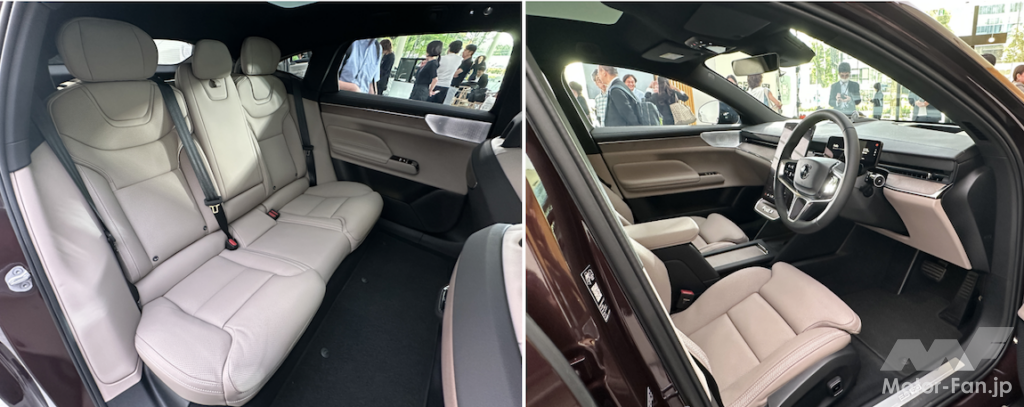
Although I didn’t have the chance to properly settle into the interior, it was clear that the cabin provides ample room for passengers in both the front and rear. The underfloor battery pack does, however, result in a slightly elevated floor height, leaving rear occupants seated with their knees higher than the seat cushion.
The upper dashboard follows a clean, horizontal theme that extends seamlessly into the door panels, creating a reassuring sense of stability across the cabin. Ahead of the driver is a slim, landscape-oriented digital instrument display, while a vertically mounted 14.5-inch touchscreen occupies the center of the dashboard. The steering-wheel controls have been pared back to the essentials, and the genuine wood trim adds a premium level of craftsmanship and tactile quality.
Volvo EX90
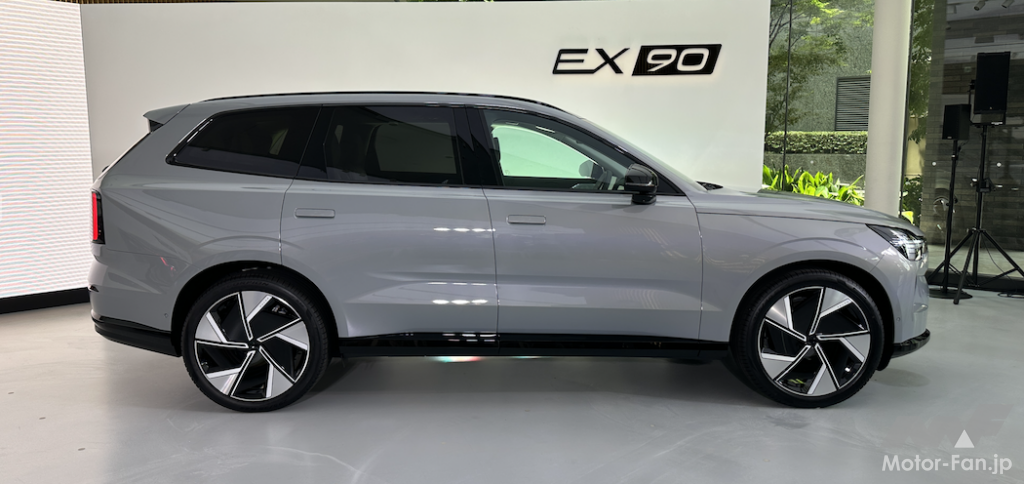
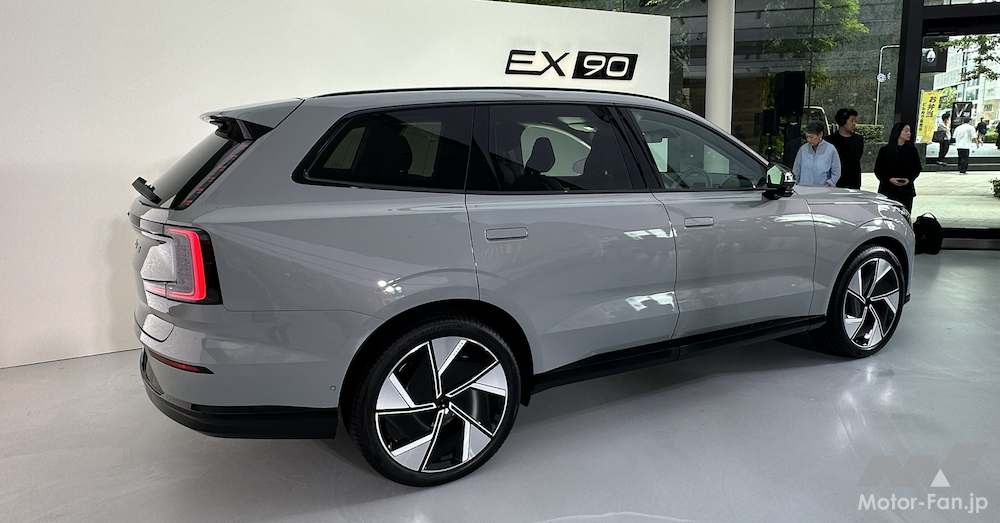
The Volvo EX90 shares the same fundamental styling theme as the ES90. A flowing character line extends along the shoulder from the front to the rear, giving the large SUV a clean, elegant profile with a strong sense of visual length.
At 5,035 mm in overall length and 1,965 mm in width, the EX90 is slightly larger than the ES90, yet the overall design language remains remarkably consistent. With a height of 1,745 mm, however, the doors are necessarily deeper, so the lower sections of the doors feature a distinct surface transition that visually reduces the perceived thickness of the body sides. This character line continues uninterrupted from the front bumper to the rear bumper, emphasizing the vehicle’s length while adding a subtle sense of sportiness. As a result, the EX90 never feels as large or as visually heavy as its dimensions might suggest.
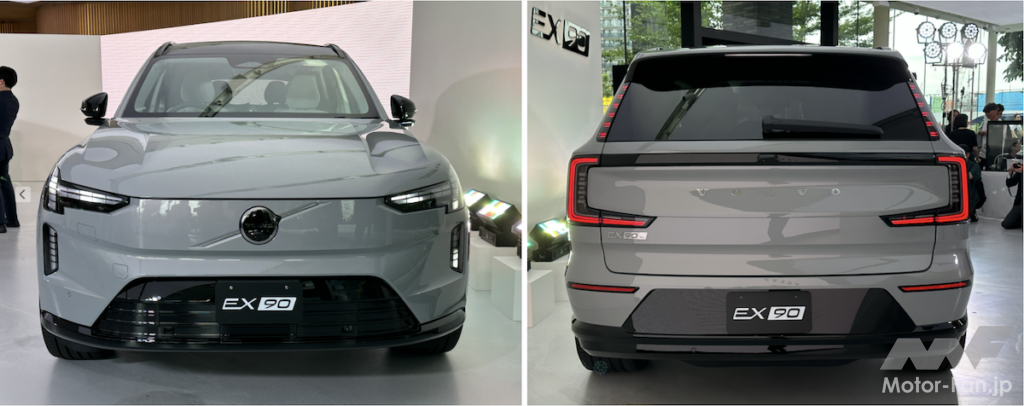
Like the ES90, the EX90 features Volvo’s signature Thor’s Hammer headlights at the front. At the rear, it adopts a newly interpreted split vertical taillamp design, giving the SUV a distinctive lighting signature of its own. Inside, the cabin provides generous accommodation for seven passengers across three rows. The dashboard design is shared with the ES90.
NTERIOR
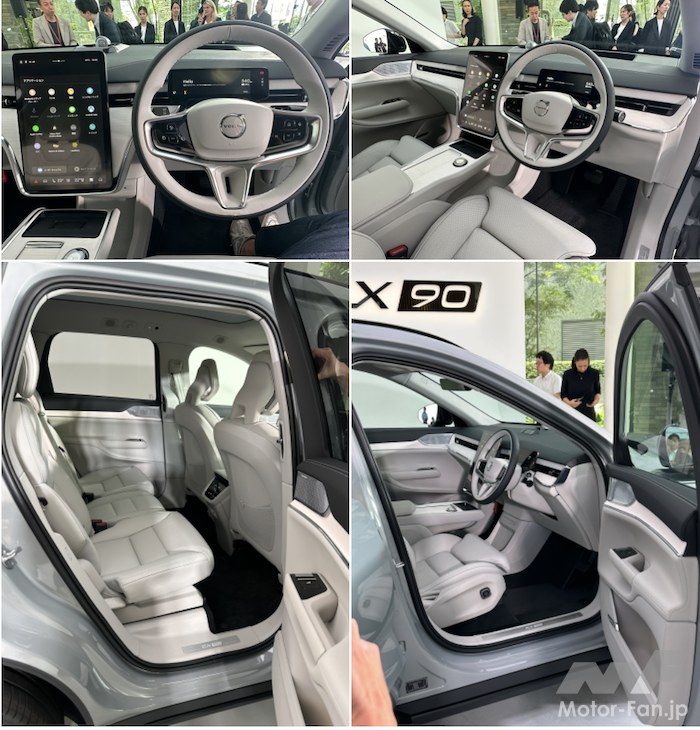
The two flagship EVs presented at the launch event were styled in Volvo’s characteristically calm and restrained design language, entirely free of elements that might create visual noise. Their carefully considered, perfectly balanced proportions leave little room for criticism, while their quiet, clean appearance avoids the overt visual intimidation often associated with flagship models. That said, customers seeking a more assertive presence in this class may find them slightly understated.
Finally, these impressions are based solely on viewing the two vehicles at close range inside the showroom. At Car Styling, our usual practice is to assess a design outdoors, under natural light, before offering our comments. I would therefore like to see both models again outdoors at a later date.
カーデザインの関連記事


Microbus Conceptから21年。VWはなぜ「ワーゲンバス」を復活させるのにこれほど時間がかかったのか?

![by Car Styling [カースタイリング]](https://motor-fan.jp/wp-content/uploads/2025/04/carstyling-jp_logo.png)
Polestarの次なる形。“大胆な進化”を掲げる新ヘッド・オブ・デザイン、フィリップ・レーマースが描く「Formula 2030」

ガンディーニの遺産を現代へ。新生ベルトーネが放つ限定コーチビルド「Runabout」のデザイン的意義

新型パジェロの原点はELEVANCE Concept? 並べてわかった「似ていないのに、どこか似ている」理由


イタリア国旗をモチーフにしたワンオフランボルギーニ「テメラリオ トリコローレ」をクエイルで披露
