“CIAO FUTURO!”: Design Students Imagine “the Fiat of the Future” / Lorenzo’s perspective Vol.14
![by Car Styling [カースタイリング]](https://motor-fan.jp/wp-content/uploads/2025/04/carstyling-jp_logo.png)



A report on the finalist designs from FIAT's student city car design project.
TEXT : Akio Lorenzo OYA
Photo : Akio Lorenzo OYA / Stellantis
Buongiorno! I’m Akio Lorenzo Oya, a journalist based in Italy.
This time, I’ll present the student projects unveiled by FIAT at Milan Design Week 2026, together with the finalists’ own comments.
Maestro Giorgetto Giugiaro Also Served as a Mentor.
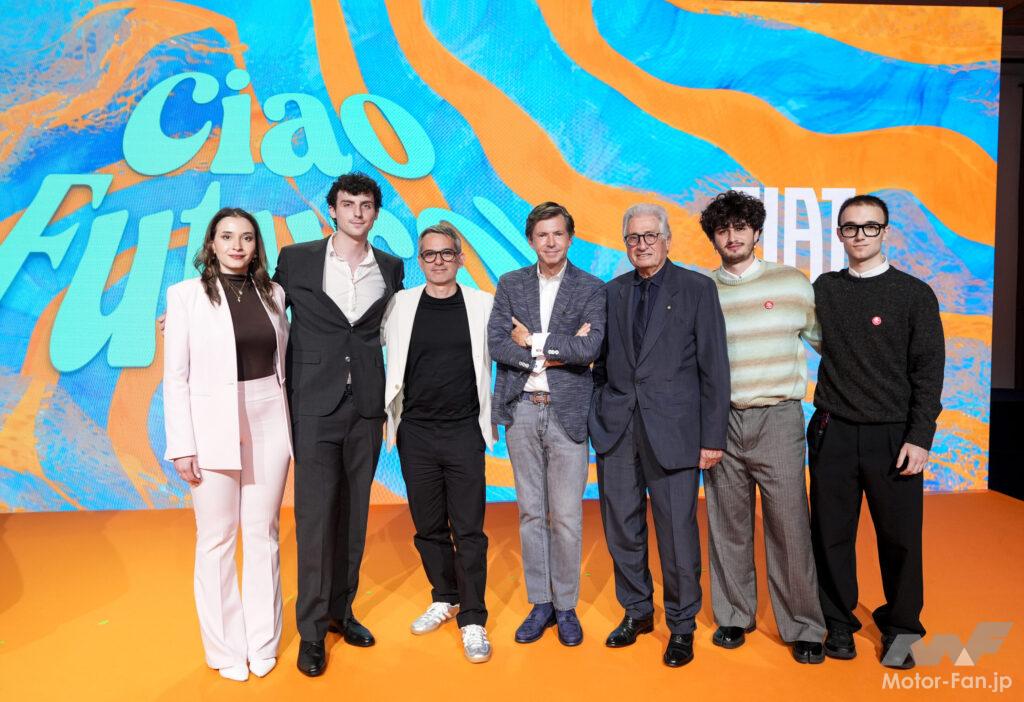
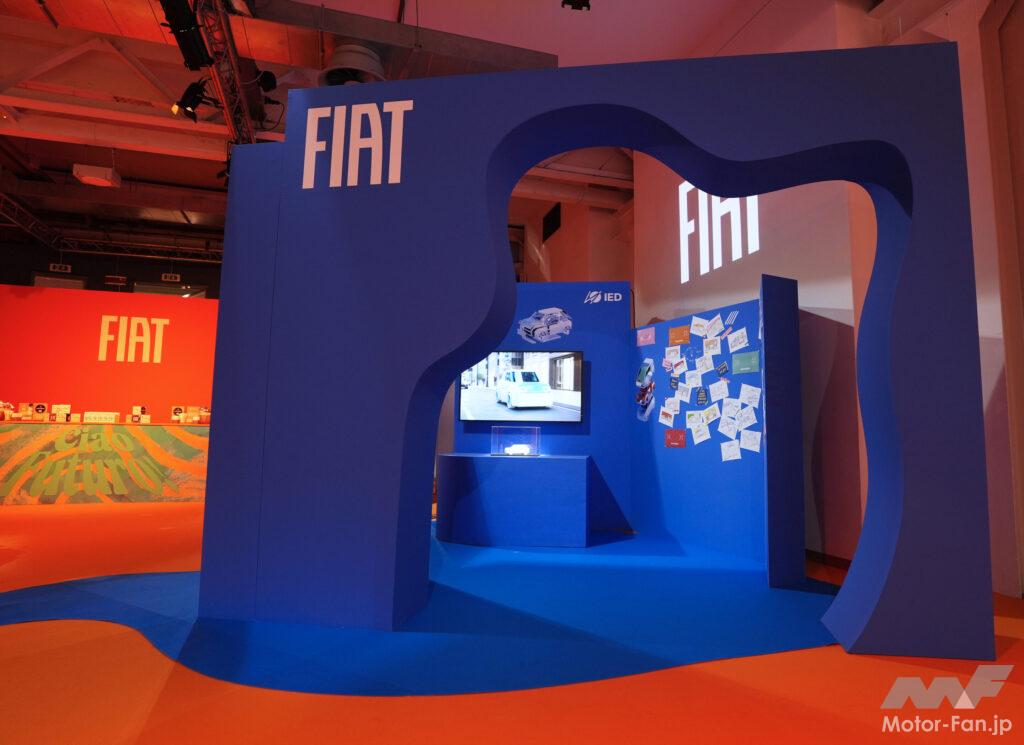
During Milan Design Week 2026, held from April 21 to 26, FIAT presented an exhibition titled CIAO FUTURO! at Magna Pars, an event venue in Milan’s Tortona district.
The exhibition was conceived to trace FIAT’s history and future as a pioneer of urban mobility through the lens of the brand’s DNA. At the heart of the program was the presentation of the finalist designs from a competition for students at the design schools IED Turin and ISIA Rome.
François Leboine, FIAT’s Head of Design, challenged the students to “describe an affordable solution that will allow you, your family and your friends to move every day where you need, in a clever, joyful and sustainable way.” Giorgetto Giugiaro, who helped shape the design of many iconic FIAT models, also joined the judging panel.
Olivier François, FIAT CEO and Global Chief Marketing Officer of Stellantis, cited legendary designer Dante Giacosa (1905–1996), who famously said, “A car should be useful before it is sophisticated.” François added, “That belief is even more relevant today. People are not asking for bigger or more complex cars, but for clear and meaningful solutions.”
The three finalist designs were presented alongside three landmark FIAT models: the 1957 Nuova 500 designed by Dante Giacosa, the first-generation Panda by Giorgetto Giugiaro, and the new Sport version of the current Topolino.
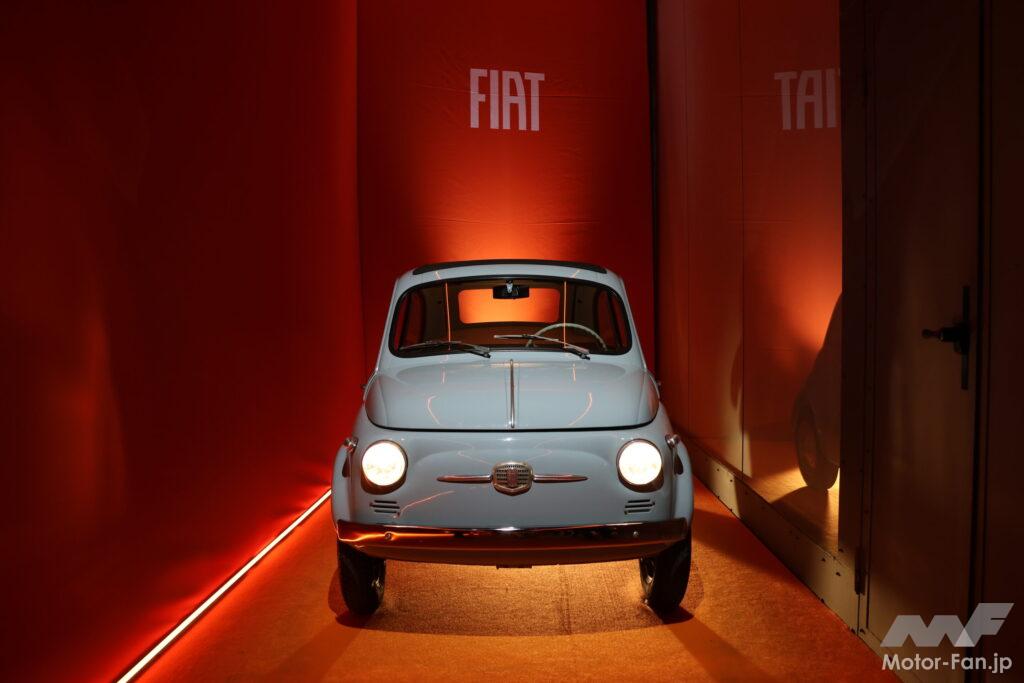
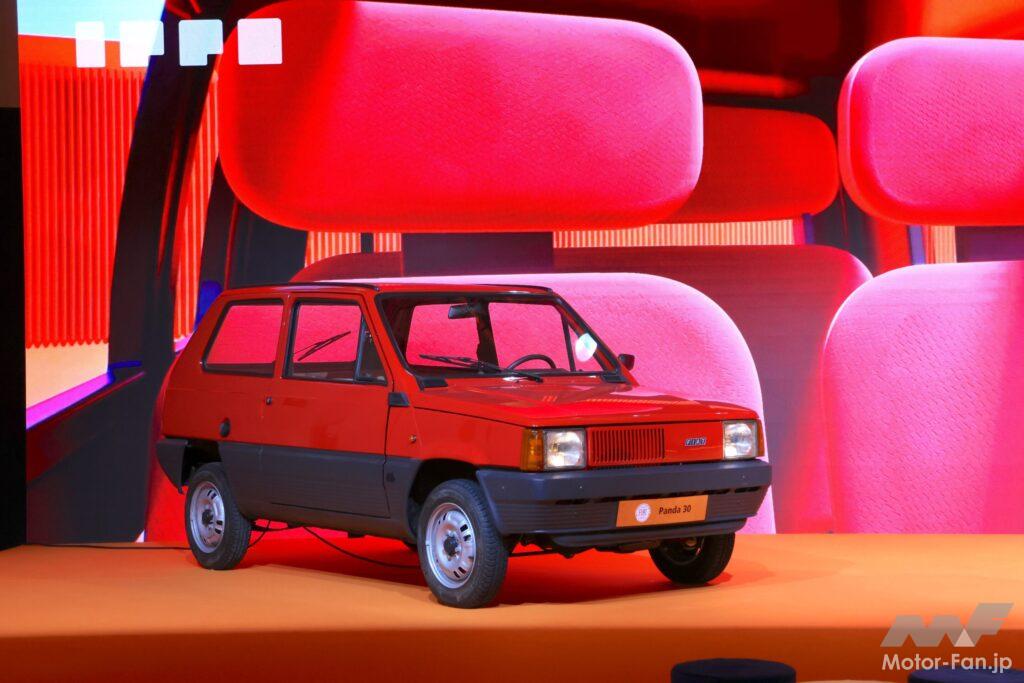
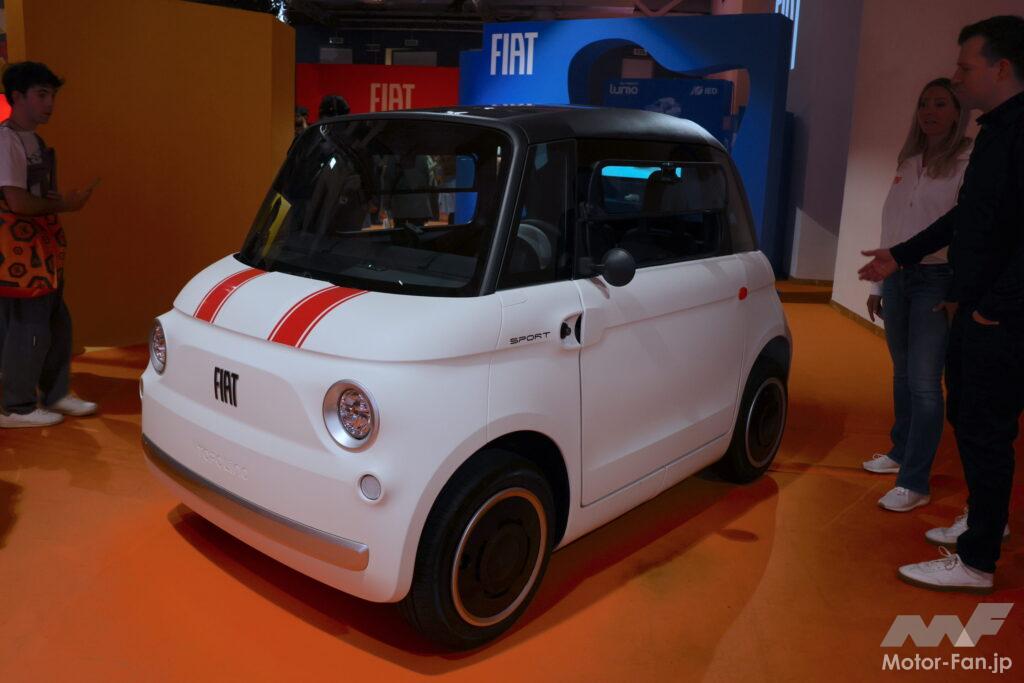
The following are the three finalist concepts.
“LUMO SU MISURA”
by Elettra Cappugi and Daniel Saviuc (IED Turin)
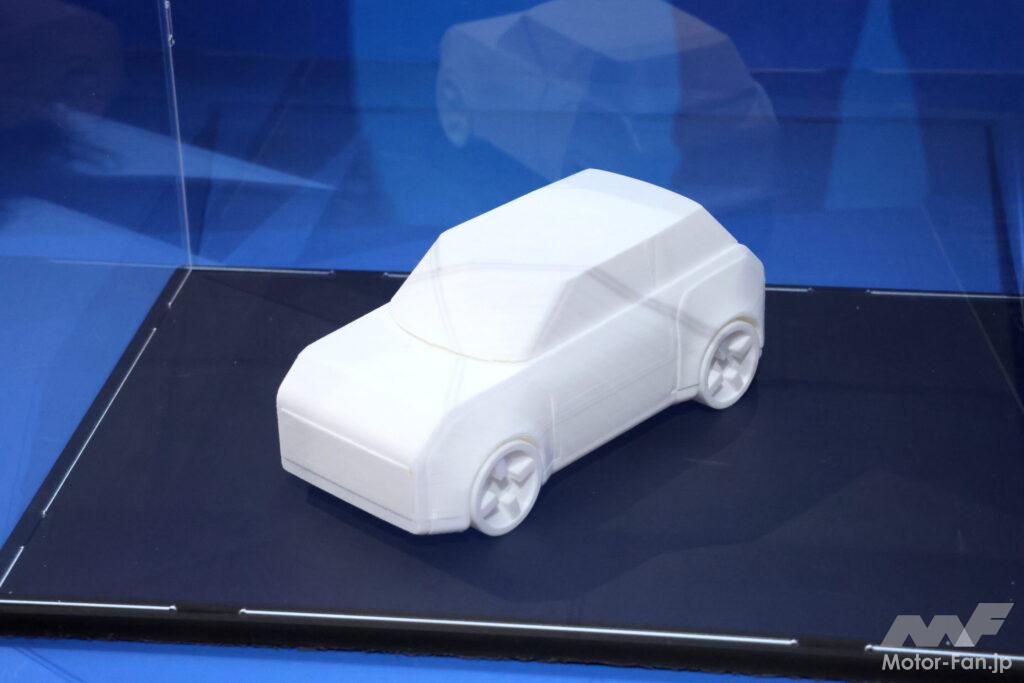
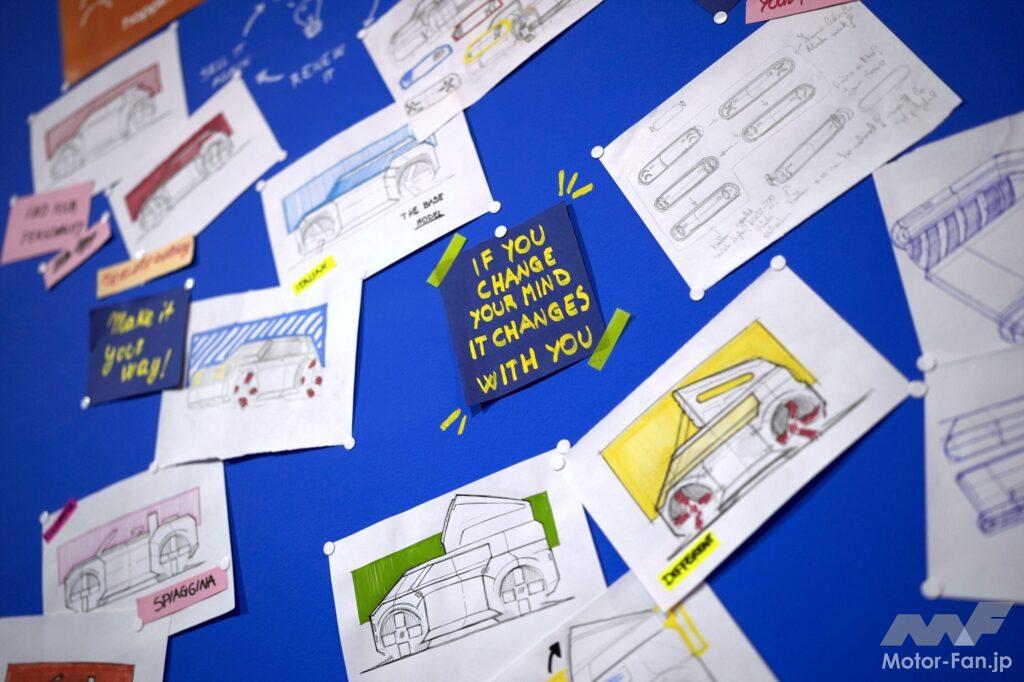
A modular vehicle designed around the concept of customization. It can evolve to suit its user’s lifestyle, with configurations ranging from a camper to an MPV. Accessories can be purchased or rented, and selected either new or remanufactured. The use of bioplastics and natural fibers helps promote a more circular approach to sustainability.
“FIZZ”
by Gabriele Menozzi (IED Turin)
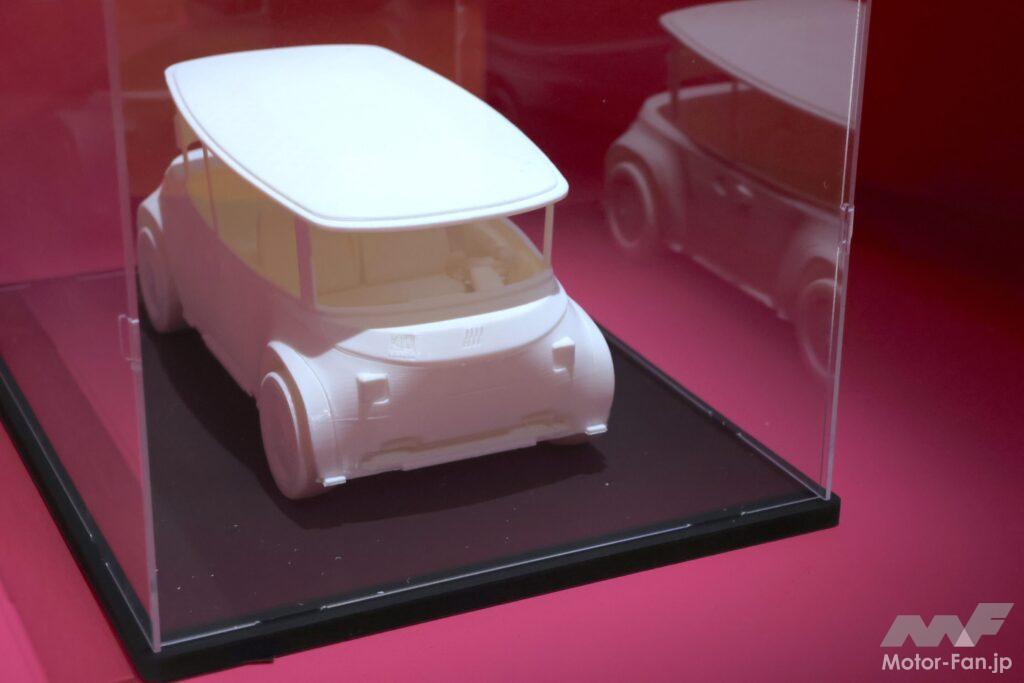
This concept focuses not only on efficient mobility but also on how people spend their time before reaching their destination. When parked, the vehicle transforms into a place where people can gather and relax. Its name is inspired by the non-alcoholic aperitif of the same name, evoking the sociability of the people who gather to enjoy it.
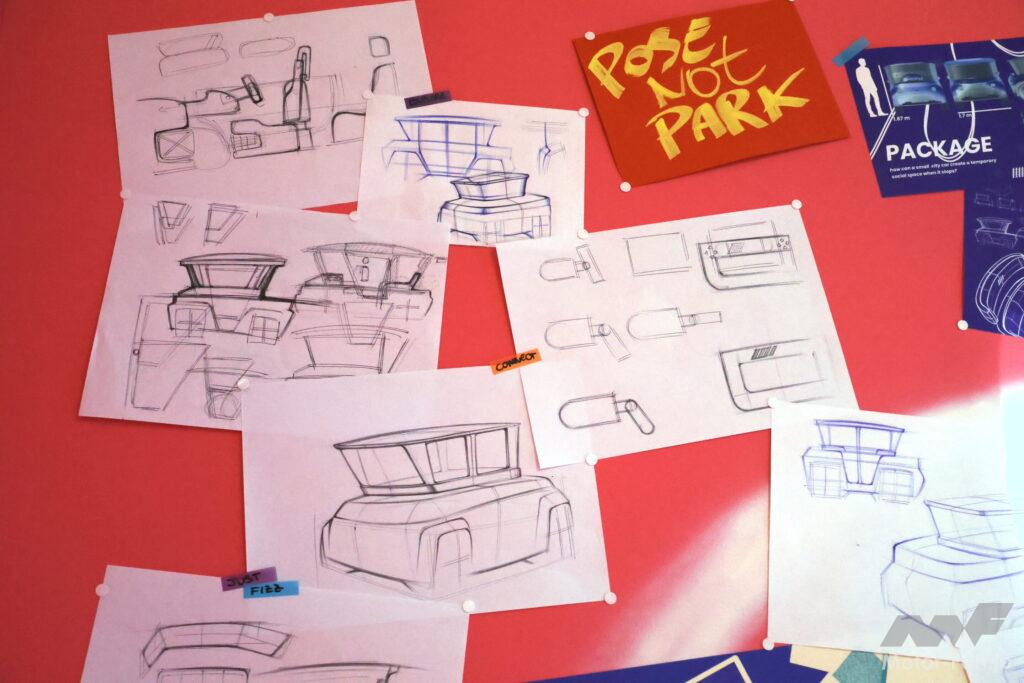
“IPPO”
by Luca Di Tonto and Alessio Vasta (ISIA Rome)
This concept reimagines the automobile not simply as a mobility tool, but as a place that adapts to the rhythm of life in small towns. By positioning the car as an extension of public space, it proposes a more human shared vision of mobility, fostering connections between people and strengthening a sense of community.
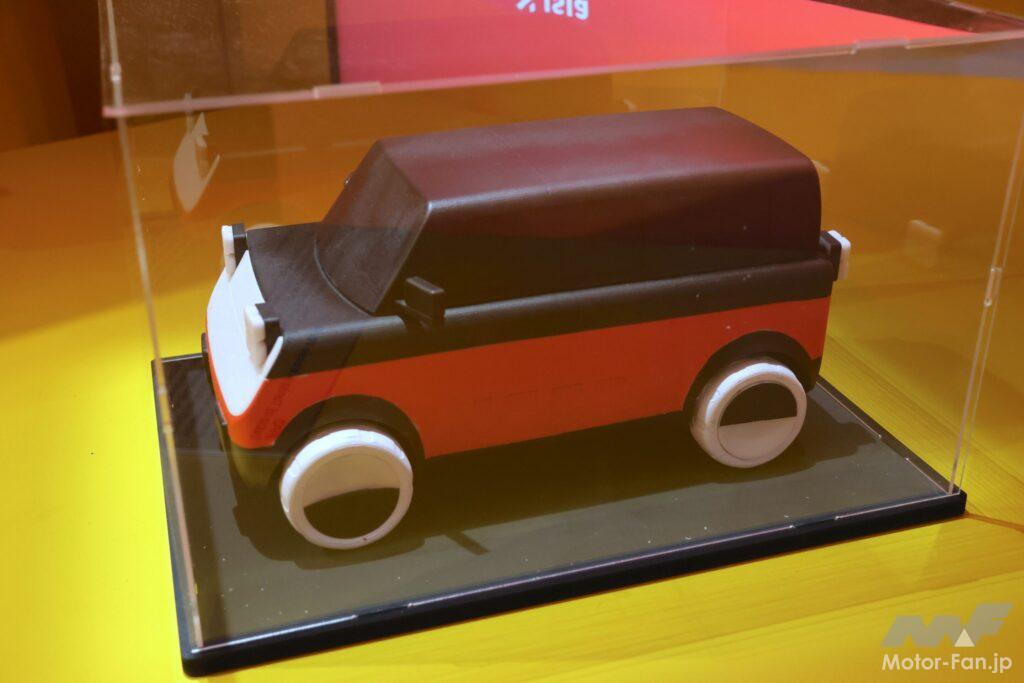
What They Learned Through the Project
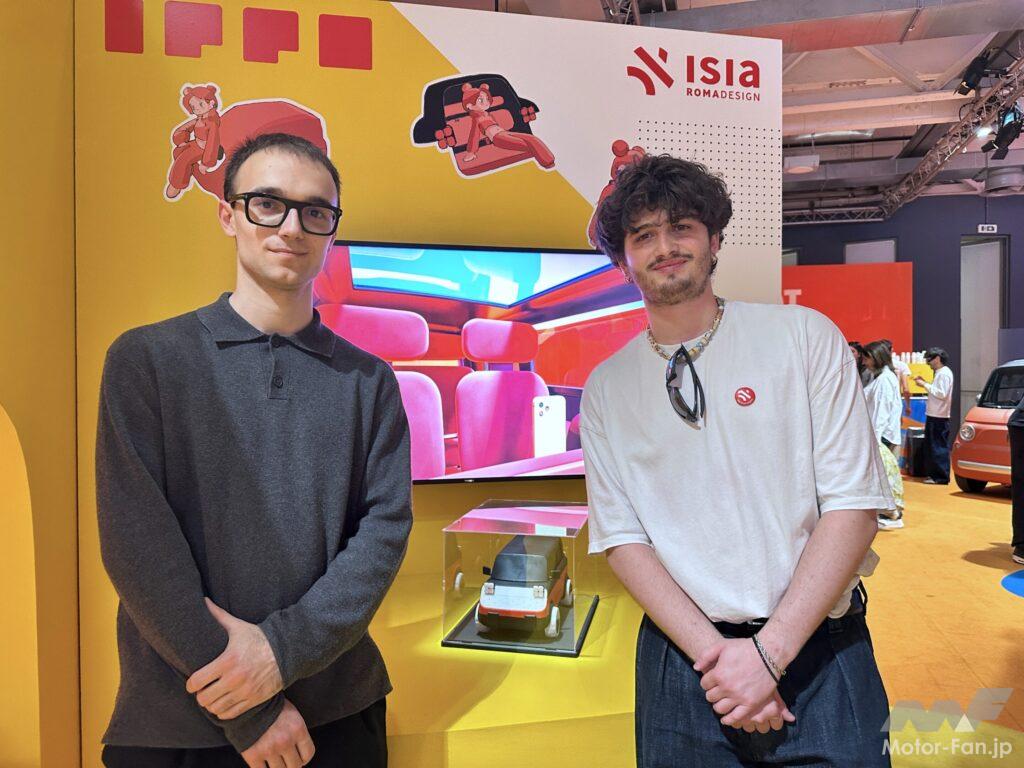
Among the three finalists, I spoke with Luca Di Tonto (born in 2003) and Alessio Vasta (born in 2003), the creators of IPPO, about the background to their project and what they learned through the development process. Both are students in the Product and Systems Design program at ISIA Rome.
Q. What led you to pursue a career in automotive design?
Di Tonto: Automotive design is where two passions I’ve had since childhood come together: my fascination with cars and machines, and my love of creating—turning ideas into something real. Cars are an integral part of our daily lives, and I’m deeply attracted to the idea of designing them in ways that make people’s lives better.
Vasta: For me as well, my fascination with cars began in childhood. Whenever I was riding with my father, I would always ask, “What’s the name of that car?” as different models passed by. I was endlessly captivated by the distinctive character of each one. As I began studying design in high school, that childhood passion gradually grew into a serious interest in automotive design.
Q. When was the design brief announced?
Vasta: It was in February 2026. The brief called for a compact city car no longer than 3.5 meters, priced below €15,000 and capable of seating four people. It also had to express a strong Italian identity while reflecting FIAT’s heritage.
Q. What did you consider to be “Italian identity” in this project?
Vasta: We pictured the small towns of Italy, where people know one another and often run into each other on the street. That led us to try to transform the car into a place where people can meet and interact.
Q. What specific ideas did you incorporate into the design?
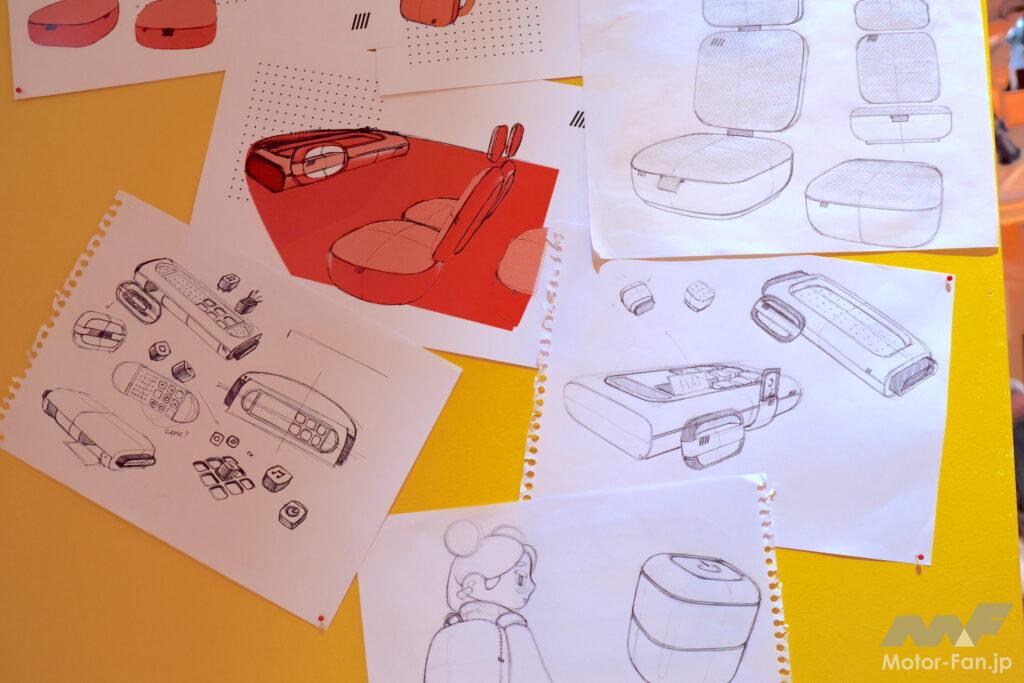
Vasta: We developed a one-touch mechanism that, when the tailgate is opened, folds the rear seatbacks backward and slides the seat cushions toward the tailgate. This allows the rear passengers to sit facing outward, transforming the car into a space where people can gather and interact with those outside.
Q. “IPPO” evokes the Italian word ippopotamo (hippopotamus). How did you come up with the name?
Vasta: The name came a little later, after our initial sketches. As we added details such as the mirrors, we realized the car looked a bit like a hippopotamus.
Q. What was the biggest lesson you learned from this project?
Di Tonto:We realized that, in our pursuit of complex ideas and solutions, we often overlook the simplest ones. Yet simplicity is often the most effective solution. FIAT’s cars are a great example of this, with Giorgetto Giugiaro’s original Panda being perhaps the ultimate expression of that philosophy.
The project taught us the importance of thinking in practical and functional terms and of always addressing the needs of the people who will use the car.Vasta:The first lesson was that simplicity is not the same as plainness. A simple idea, supported by strong meaning and careful thought, is far more powerful than a complicated one with no real identity. The second was the importance of experimentation. I don’t believe you can arrive at a good design unless you’re willing to make mistakes. And if you’re not enjoying the process, it’s difficult to be truly creative.
Q. When did you receive feedback from the mentors?
Vasta:It was at the end of March 2026, at Centro Stile FIAT (FIAT’s Styling Centre) in Turin.
Q. What kind of feedback did Giorgetto Giugiaro give you?
Di Tonto: It was an unforgettable experience to have the opportunity to speak with someone as iconic as he is. He was somewhat critical of the design from the standpoint of its form and aesthetics. However, we were pleased that he appreciated its functionality and the fact that it was simple and realistic enough to be put into production.
The Key to FIAT’s Future
The finalists selected for the project have been offered the opportunity to undertake a three-month internship at Centro Stile FIAT. “When we heard the news, we were literally speechless. It was far beyond anything we had expected. Even now, we still can’t believe we were chosen,” Vasta said with delight.
Seeing students who are more interested in designing cars that enrich everyday life than glamorous supercars gave me a real sense of optimism for the future. At the same time, amid the eye-catching installations that dominate Design Week, I was impressed by FIAT’s commitment to nurturing young designers with the ambition to create simple, intelligent cars. I believe that this is precisely what will be key to FIAT’s future as it faces increasingly fierce competition from emerging Chinese brands in the European market.Until next time.
arrivederci!