“Car Styling Design Grand Prize 2025” Winners Announced. Mitsubishi Delica Mini Selected for Production Car Category, Century for Concept Car Category



Awards Presented at “The 47th C&T MTG 2026” Held on January 17th
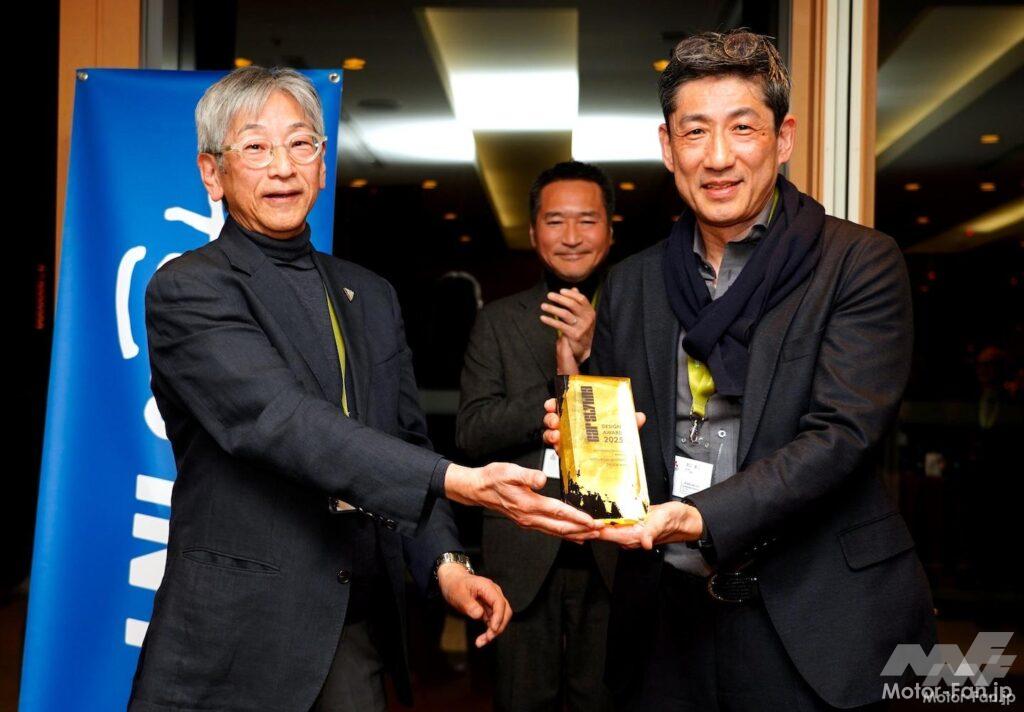
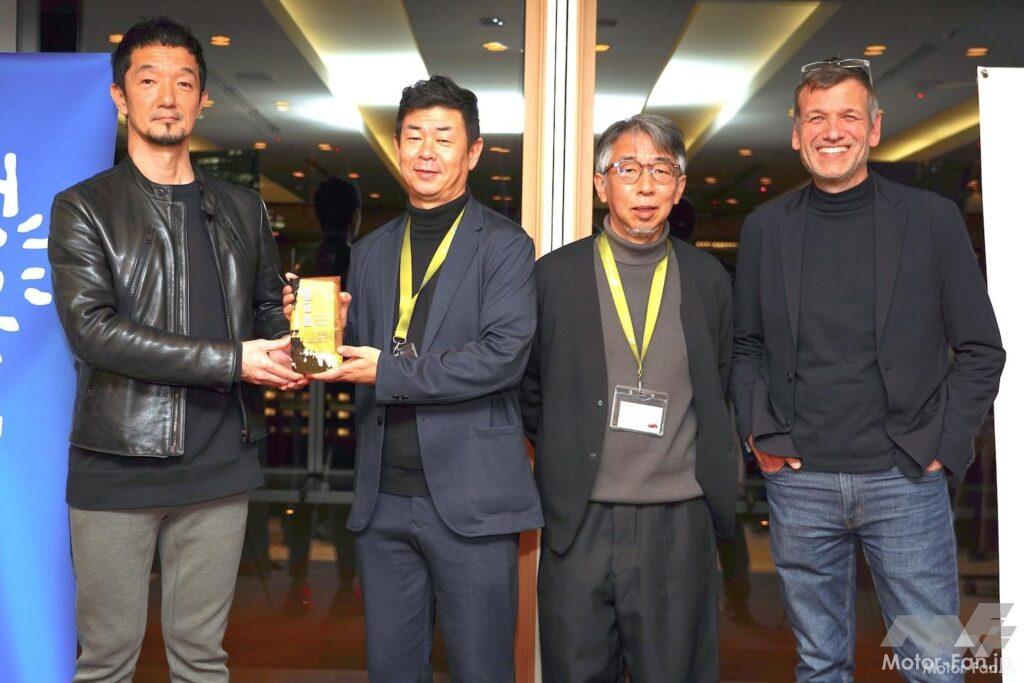
Car Styling recently held the final selection meeting for the “Car Styling Design Grand Prize” and determined the winners for both the Production Car and Concept Car categories. The Mitsubishi Delica Mini was selected from the Production Car Category and the Century from the Concept Car Category, with awards presented at “The 47th C&T MTG 2026” held in Tokyo on January 17th.
This year’s judging was limited to domestic manufacturers, with the Production Car Category targeting mass-production models that went on sale domestically between November 1, 2024 and October 31, 2025, and the Concept Car Category targeting concept cars exhibited at the Japan Mobility Show 2025 held in October-November 2025.
The selection process consisted of first-round and final judging. In the first round, design leaders from each automotive company selected three vehicles from among the eligible vehicles to determine the Three Best for both categories. Subsequently, at a judging committee composed of five judges, designers from the automakers whose vehicles made the Three Best gave presentations on the design development of each vehicle, followed by final judging where the Best 1 was selected through deliberation.
For details on eligible vehicles and selection methods, please refer to the following article.


Judge: Takumi Yamamoto. Established design studio Takumi YAMAMOTO in France after working as a Peugeot-Citroën designer.

Judge: Harry Uden. Came to Japan from FORD UK. President of Envision Co., Ltd., a design consulting company, after working at DCI: Design Club International.

Judge: Shinichi Inada. Former Chief Designer at Toyota Motor Corporation. Currently Professor in the Department of Craft and Industrial Design, Faculty of Art and Design, Musashino Art University.

Judge: Yuko Saito. Product designer. Currently works as an independent CMF designer engaged in CMF development and trend analysis for various mobility products both domestically and internationally.

Chief Judge: Osamu Namba (Car Styling Editor-in-Chief).
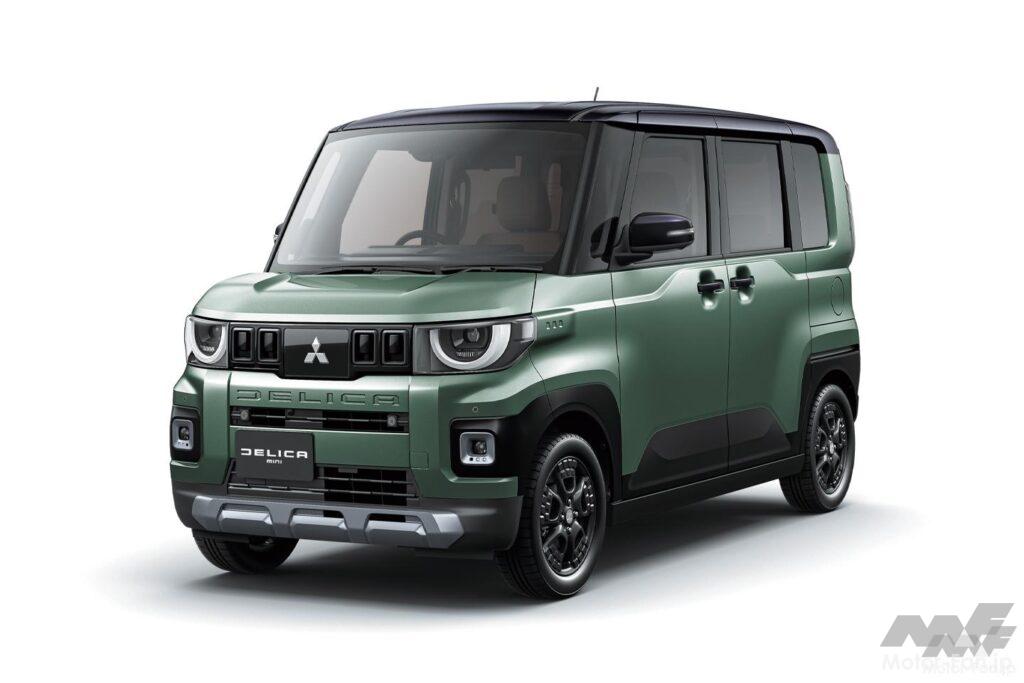
Production Car Category: Mitsubishi Motors “Delica Mini”
The Three Best for the Production Car Category were the Toyota Crown Estate, Mitsubishi Delica Mini, and Lexus GX. Through deliberation among the judges, the Delica Mini was determined as Best 1. The selection rationale is as follows:
[Selection Rationale]
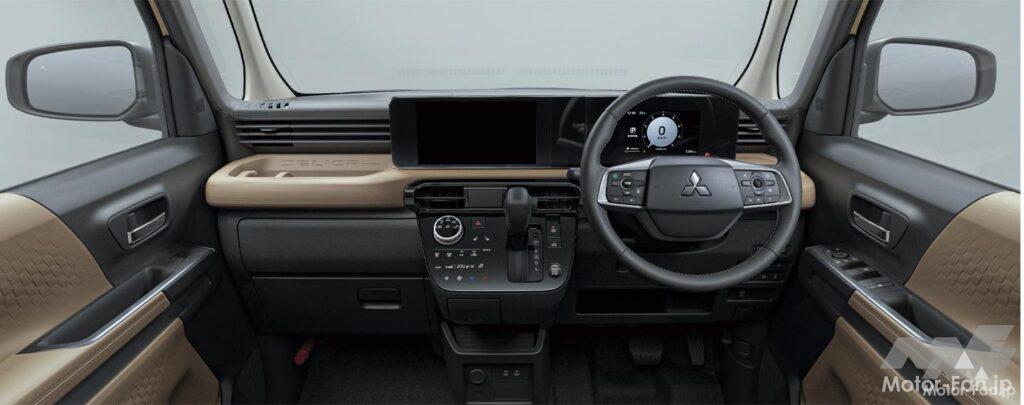
The greatest evaluation point of the Mitsubishi Delica Mini is its faithful realization of the concept and uncompromising attention to detail. In the exterior, the clever three-dimensional composition within the kei-car framework plans the upper and lower body according to their respective design purposes, and the three-dimensional expression that leverages the transitional section between them is highly skillful, achieving the presence of a kei SUV. In the interior, the high level of completion despite the severe budget and dimensional constraints of a kei-car was praised, and the fact that despite being a joint development with the Nissan Roox, the Delica Mini’s concept is clearly expressed in both the interior and exterior was also highly evaluated.
It also demonstrates excellent skill in CMF (Color, Material, Finish). Despite the limitation of not being able to use expensive materials due to being a kei-car, the skillful color selection and material usage, and the realization of a refined and fitting texture aligned with the “glamping” theme, made a favorable impression.
In the highly competitive super-height wagon market, the establishment of a unique niche position by leveraging the powerful “Delica” brand was also evaluated as unique. In the exterior design, the color-blocking concept is clear and emphasizes a solid body, and even with limited freedom in styling, the design of the belt line and rear quarter, and the front fender styling create tire presence and an SUV-like stance. The refined front end, with reduced “plastic feel” compared to the previous model, was also evaluated.
In the interior, the picture frame concept that encompasses from the instrument panel to the A-pillar, treating the window like a “picture frame” and other spatial divisions, was evaluated for challenging new concepts in a kei-car.
On the other hand, regarding the price setting that exceeds 3 million yen for some models, voices of surprise and confusion arose, wondering “this price for a kei-car?” Additionally, regarding the framework and packaging, the evaluation was also given that it does not break out of the existing framework of “kei super-height wagon” established by Daihatsu Tanto, and the proportion itself does not have novel originality.
After such exchange of opinions, the Delica Mini maintained Mitsubishi’s identity within the strict framework of a kei-car, and reached the judges’ final consensus that it is “appropriate as the best production car.” It can be said to be an excellent example of achieving both design and functionality at a high level in a kei-car with many constraints.
Concept Car Category: Toyota Motor Corporation “Century”
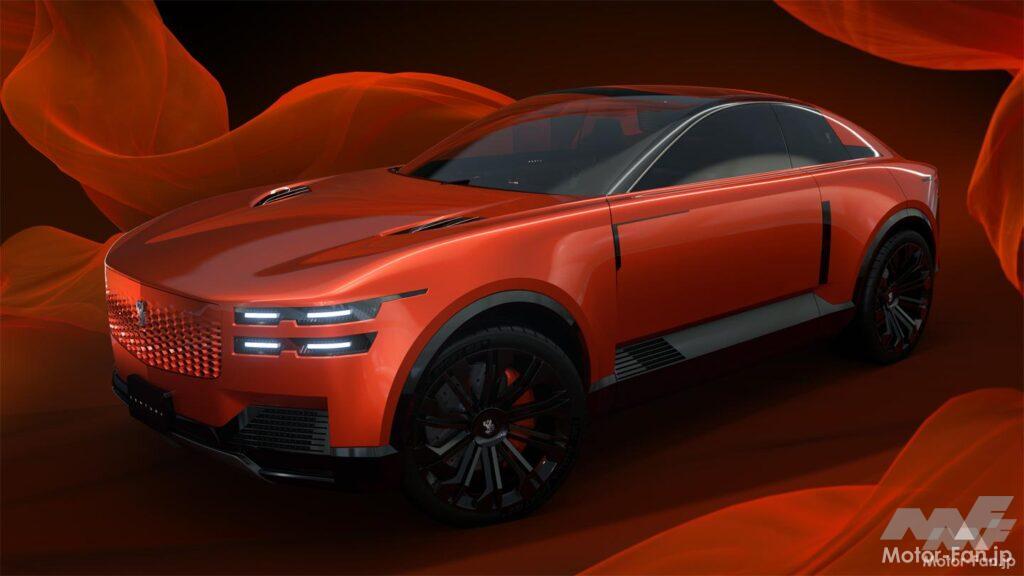
The Three Best for the Concept Car Category were the Century, Daihatsu K-OPEN, and Lexus LS Concept. Through deliberation among the judges, the Century was determined as Best 1. The selection rationale is as follows:
[Selection Rationale]
The Century has an overwhelming presence as a message sent from Japan in this era, and was highly evaluated not merely as a luxury car, but for Toyota’s strong determination to “shoulder the future of Japan’s automotive industry” in aiming to represent Japan as a premium brand.
New proposals in the design concept were also evaluated. The concept of “a chauffeur car yet a coupe” is unique, and the design that makes the beautiful body color stand out more by eliminating the rear window was well received.
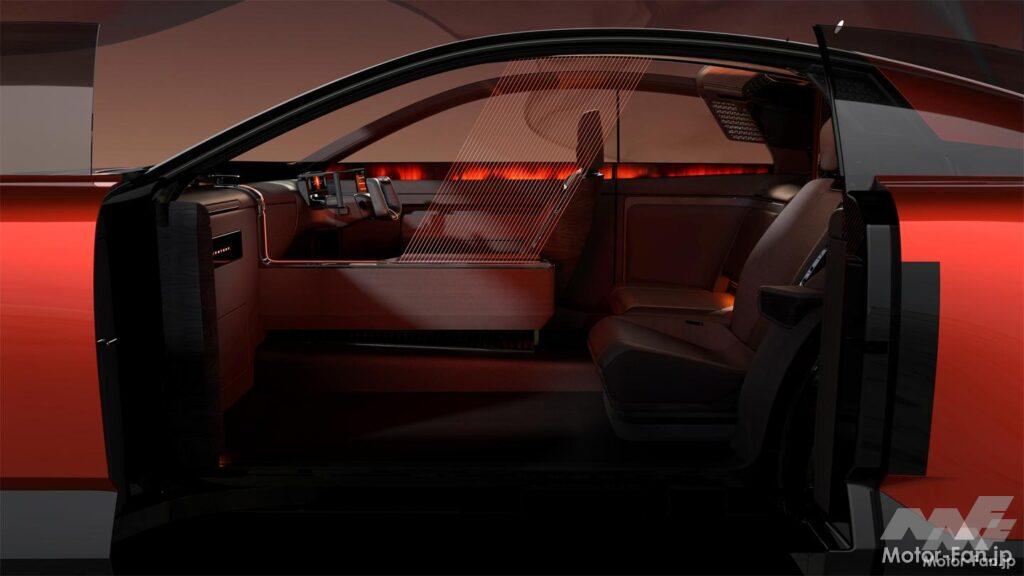
The exterior design stands out with its dignified presence and excellent proportions, and was evaluated for expressing sportiness as a coupe while maintaining the composure of this class. In the interior, the mechanism where the passenger side moves significantly and the spatial composition with partitions in between were noted for feeling new in the “concept-focused new way of dividing space.”
Particularly praised was the excellence of CMF (Color, Material, Finish). The painting quality is extremely high, and the finish with “60 coats” of overwhelming labor is proof of high technical capability.
On the other hand, while there is an overwhelming presence, there was also the observation that in terms of whether the styling itself offers new proposals, it is “made entirely of existing design language.” While the attitude of trying to escape from the traditional “heavy and large” luxury feel was acknowledged, concerns were also raised about whether this is the form of future luxury.
Although there is room for debate regarding design innovation, the reason Century was highly evaluated over other candidates is its overwhelming power in “creating a car representing Japan” and the craftsmanship-like level of completion that beautifully brought this to form.
We will introduce an overview of the judges’ evaluations for the four vehicles that narrowly missed winning the Production Car and Concept Car categories on the next page. It should also be added that in this final judging, the evaluations of each vehicle were closely contested and the judges struggled with selecting the Best 1, and in the Production Car Category, they faced the difficulty of evaluating kei-cars and registered vehicles on the same scale.
カーデザインの関連記事


Microbus Conceptから21年。VWはなぜ「ワーゲンバス」を復活させるのにこれほど時間がかかったのか?

![by Car Styling [カースタイリング]](https://motor-fan.jp/wp-content/uploads/2025/04/carstyling-jp_logo.png)
Polestarの次なる形。“大胆な進化”を掲げる新ヘッド・オブ・デザイン、フィリップ・レーマースが描く「Formula 2030」

ガンディーニの遺産を現代へ。新生ベルトーネが放つ限定コーチビルド「Runabout」のデザイン的意義

新型パジェロの原点はELEVANCE Concept? 並べてわかった「似ていないのに、どこか似ている」理由


イタリア国旗をモチーフにしたワンオフランボルギーニ「テメラリオ トリコローレ」をクエイルで披露
