Spazio Design – The New Permanent Exhibition at the Museo Nazionale dell’Automobile in Turin – / Lorenzo’s perspective Vol.15



Turin (Torino), in northwestern Italy, is home to the Museo Nazionale dell’Automobile (MAUTO), one of the world’s oldest and most historic automobile museums.
In recent years, MAUTO has been rethinking and reshaping the concept behind its exhibitions. This time, Mr. Oya visited the museum in person and has sent us a report on these changes.
In this installment, he explores MAUTO’s fascinating new approach to presenting automotive design and its history.
TEXT : Akio Lorezo OYA
PHOTO : Akio Lorenzo OYA
Buongiorno! This is Akio Lorenzo Oya, a journalist based in Italy.
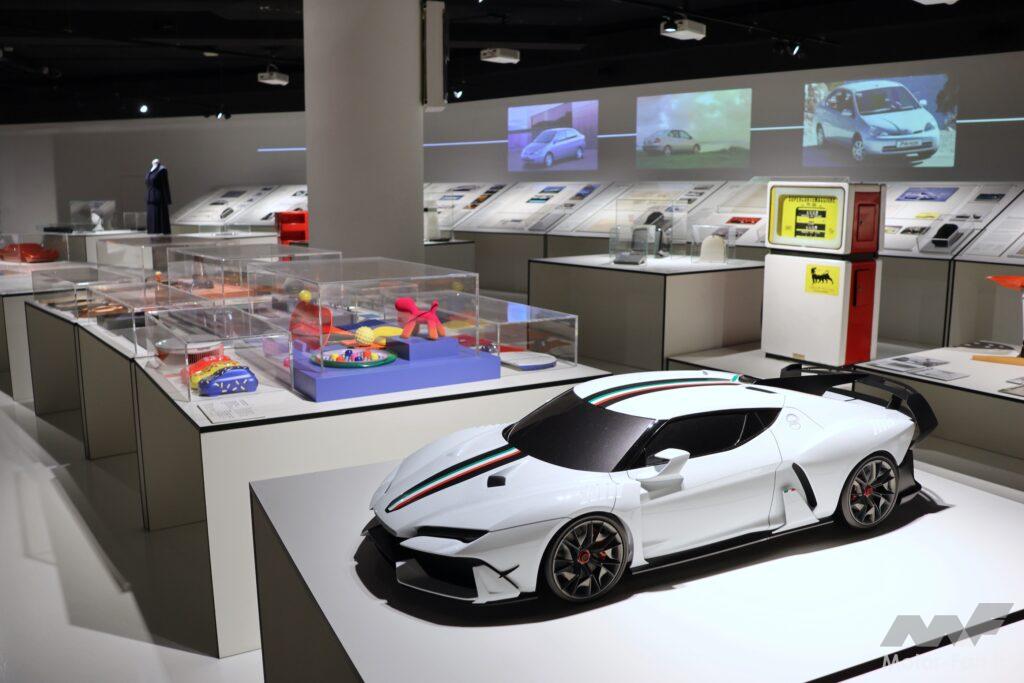
In recent years, the Museo Nazionale dell’Automobile (MAUTO) in Turin has been gradually renewing its permanent exhibitions. As part of this process, a new gallery dedicated to design opened in November 2025.
A Collection Befitting the Heart of Italy’s Automotive Industry
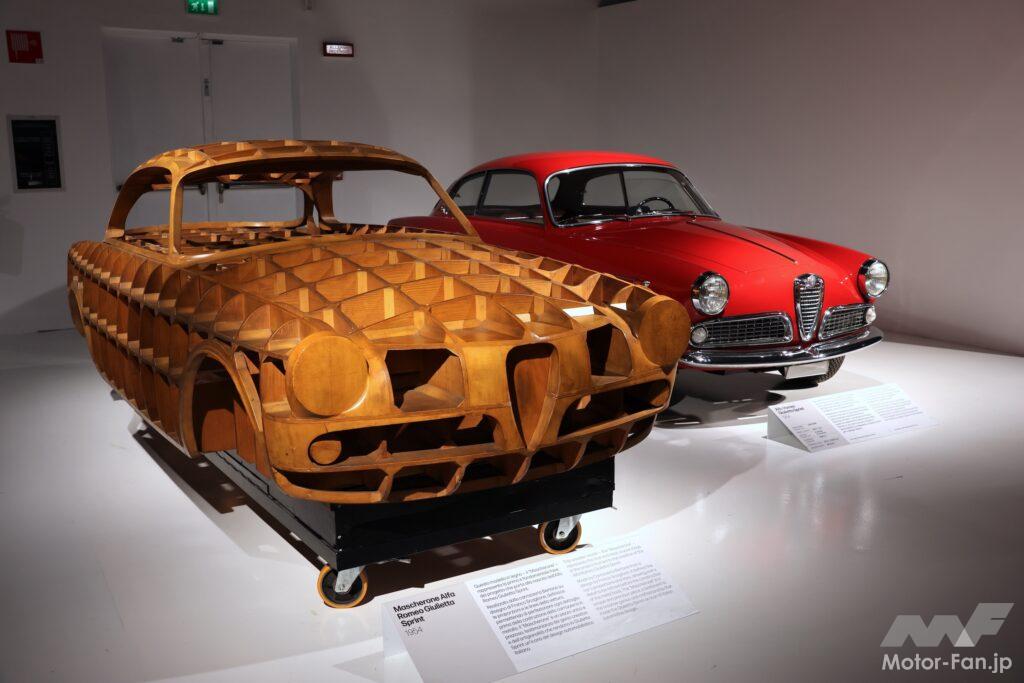
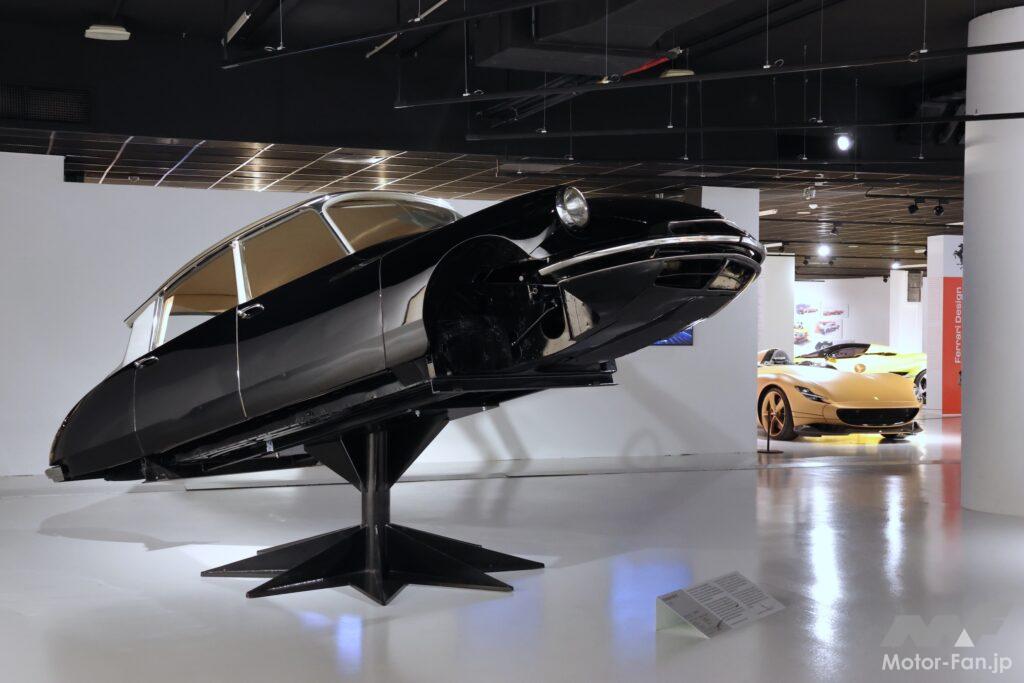
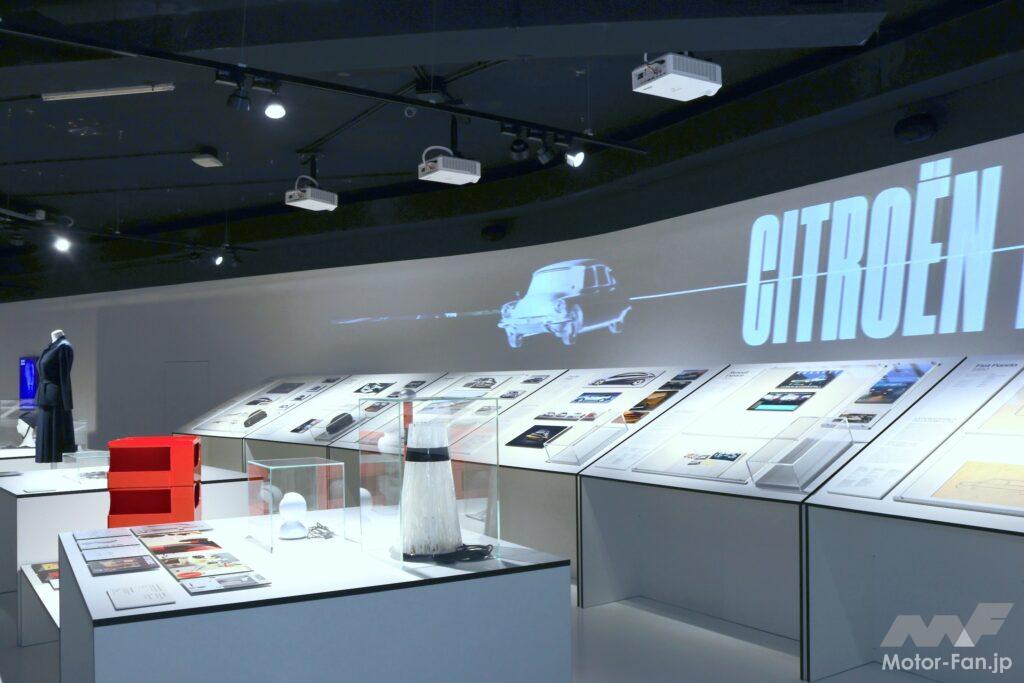
The gallery, named “Spazio Design” (“Design Space”), opened in November 2025 in a section of the museum’s second floor. It is designated as Room 15 along the museum route.Its fan-shaped exhibition area, covering approximately 2,000 square meters, traces the evolution of automotive and product design.The automotive section was curated by Silvia Baruffaldi, Editor-in-Chief of AUTO&DESIGN. It explores the process by which ideas are transformed into tangible models, the evolution of automotive styling over time, and the social and technological changes that have both influenced—and been influenced by—the automobile.Among the exhibits are a 1954 Alfa Romeo Giulietta Sprint and the full-scale wooden master model produced by Carrozzeria Bertone to refine its form in detail before fabrication of the metal body. Also displayed is an object based on the Citroën DS, exhibited by Citroën at the 1959 Milan Triennale. Both had previously been displayed in separate galleries before the museum’s renovation. Bringing them together in this new context more clearly highlights the significance of each car in the history of design.
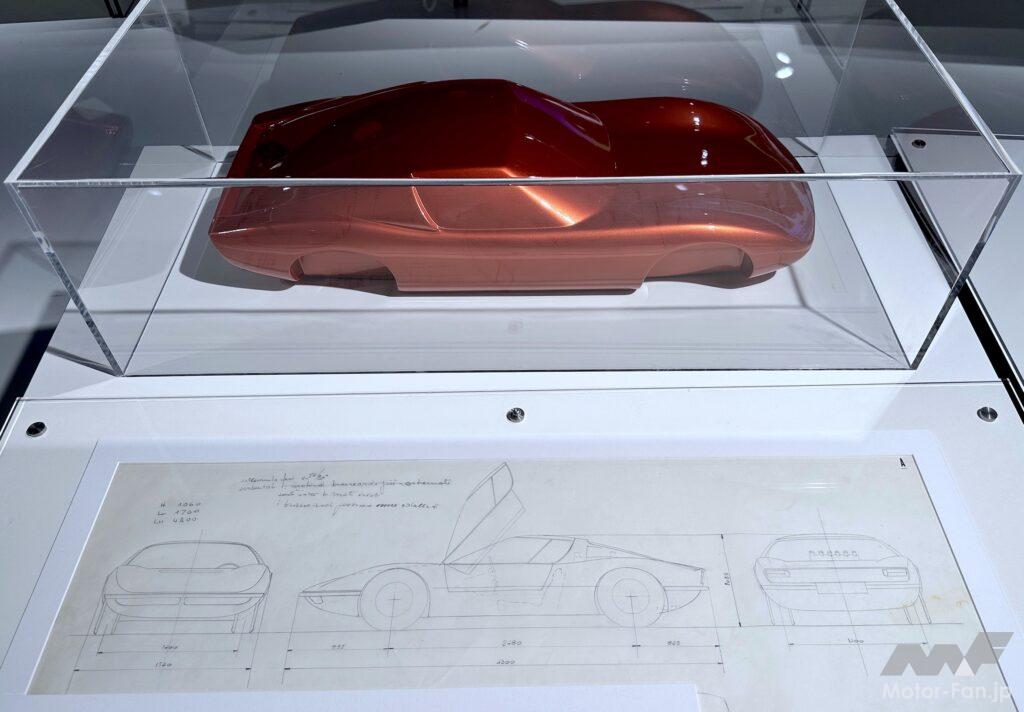
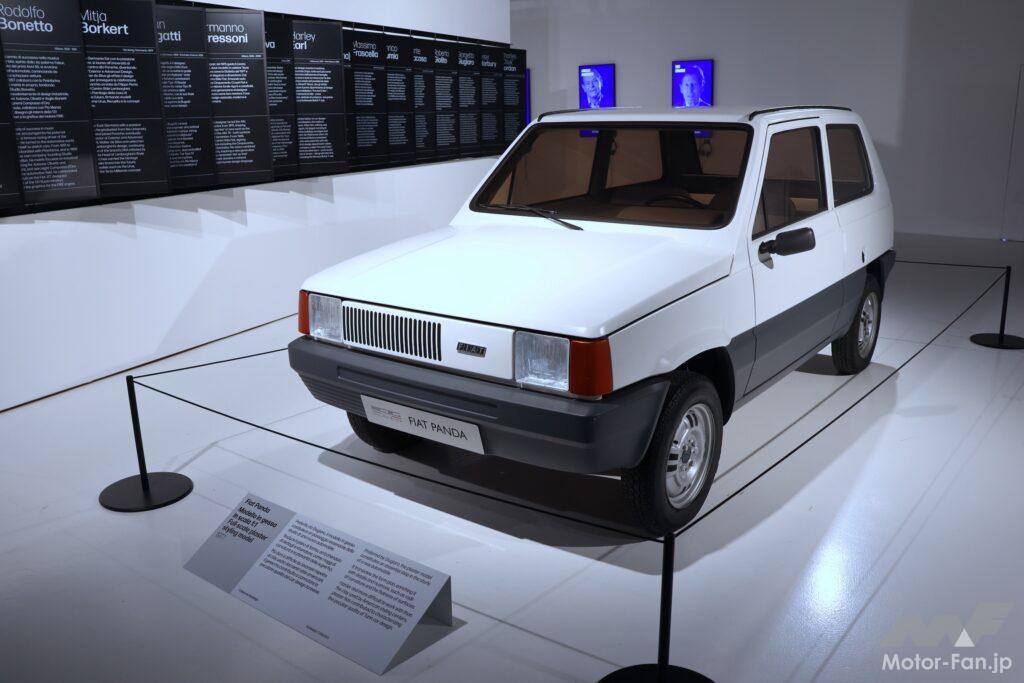
Drawings and sketches from the early development stages of the 1966 Lamborghini Miura and the original 1980 Fiat Panda are further examples of a collection worthy of Turin’s status as the historic center of the Italian automotive industry.
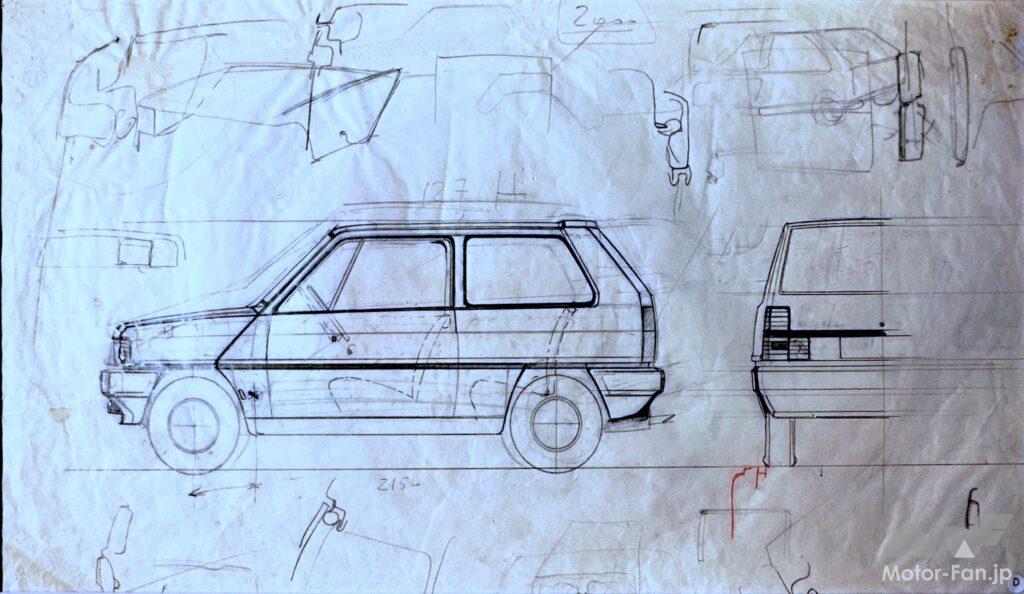
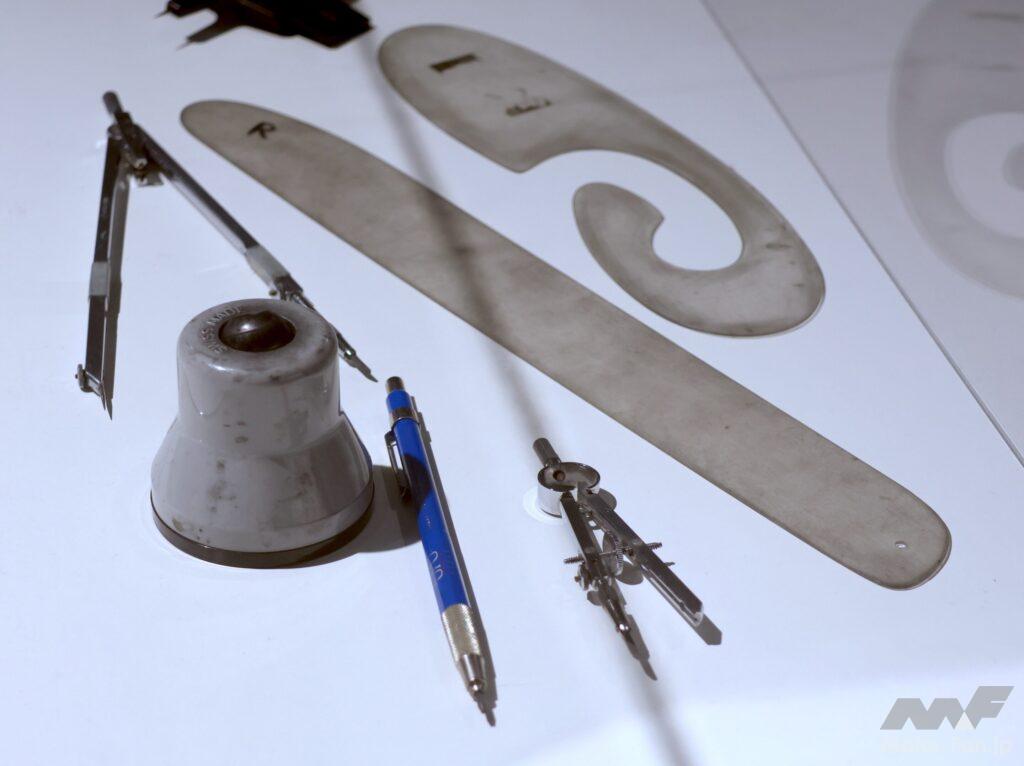
Along the walls, iconic models from the history of automotive design are presented chronologically. Among them are an image sketch by Satoshi Wada showing the “Single frame grille” concept from his time at Audi, as well as the Toyota Prius.
A Space for Temporary Exhibitions Next Door
The product design section was created with the cooperation of Triennale Milano. The selection features masterpieces that have shaped the history of Italian industrial design, including the 1957 “Mezzadro” stool by brothers Achille and Pier Giacomo Castiglioni; the 1964 “Algol 11” television by Marco Zanuso and Richard Sapper; and Mario Bellini’s 1968 “GA45 Pop” record player and 1973 “Divisumma 28” calculator.
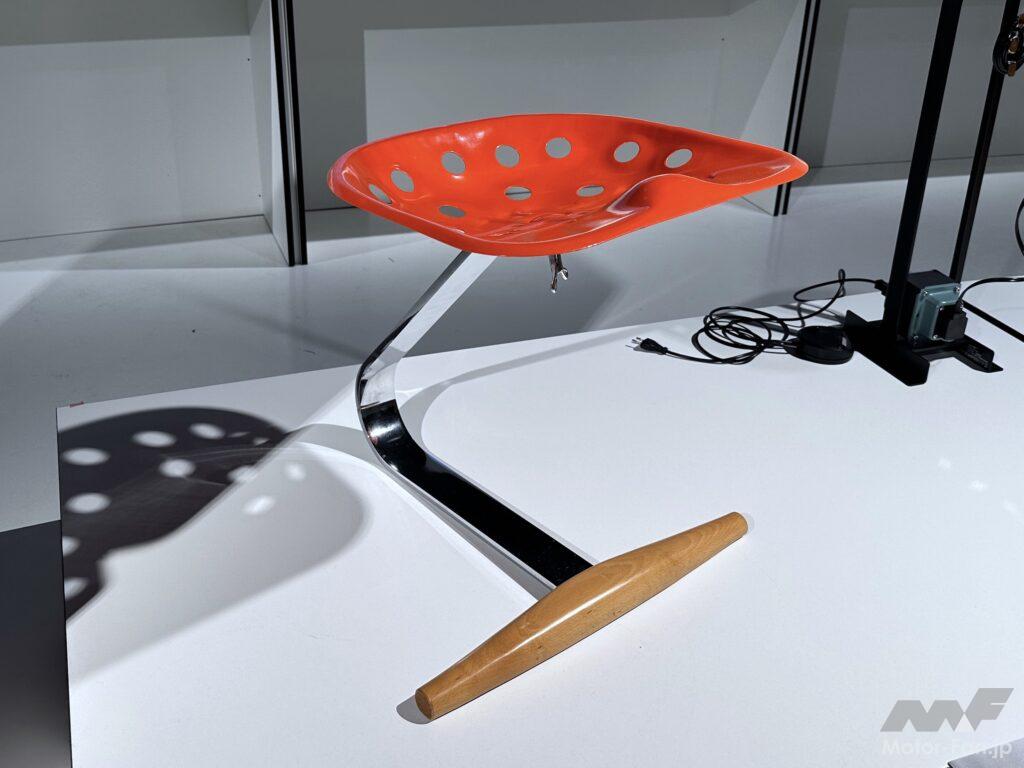
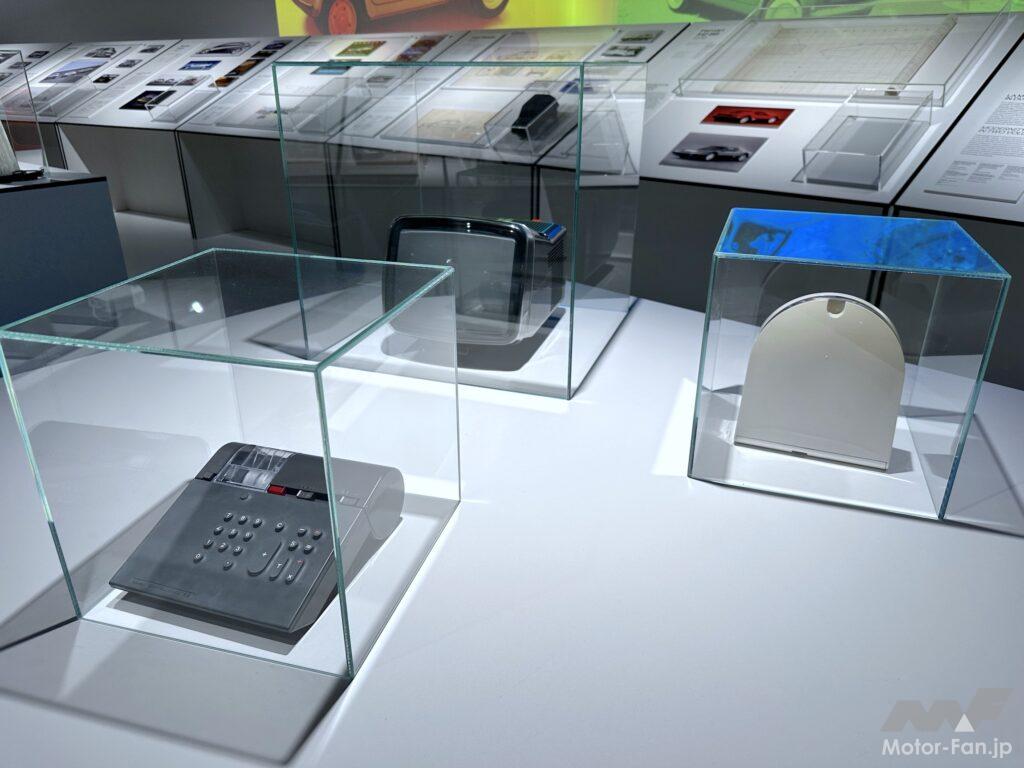
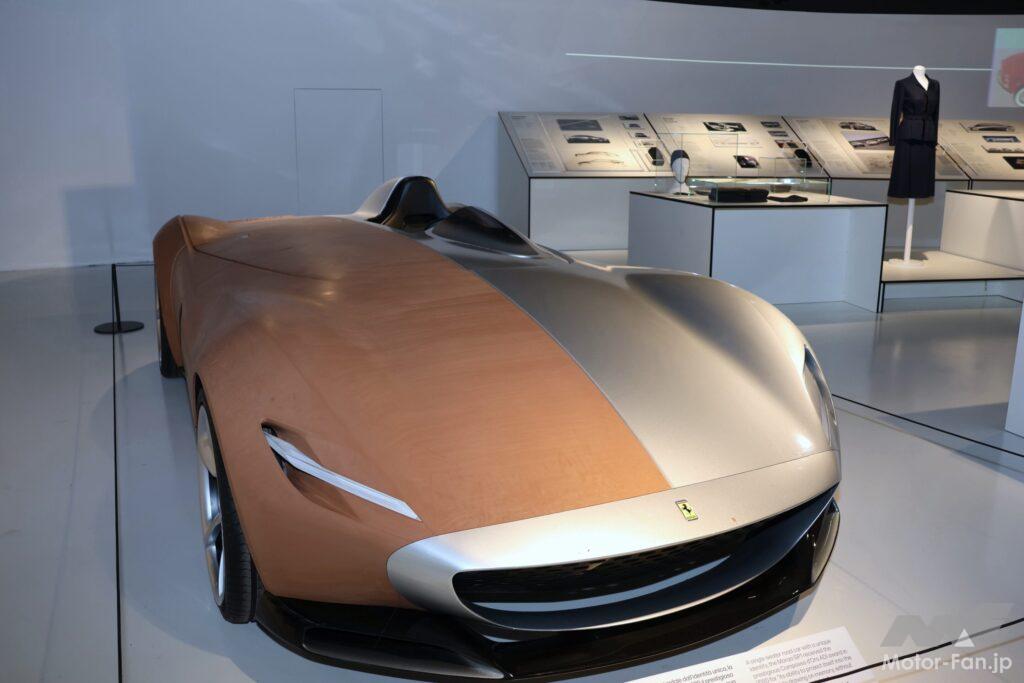
A new temporary exhibition space has also been established adjacent to the permanent exhibition. From November 2025 through April 12, 2026, it hosted FERRARI DESIGN. CREATIVE JOURNEYS 2010–2025. This was followed in summer 2026 by 12 Automobili, curated by Professor Paolo Tumminelli of the Köln International School of Design.
Reflections on the Car Designers’ Section
Before Spazio Design was created, the museum had a gallery devoted to car designers. It featured several designers active in Italy, including Giorgetto Giugiaro and Leonardo Fioravanti, while the names of designers from different eras were presented on a wall in the form of a chronological timeline.
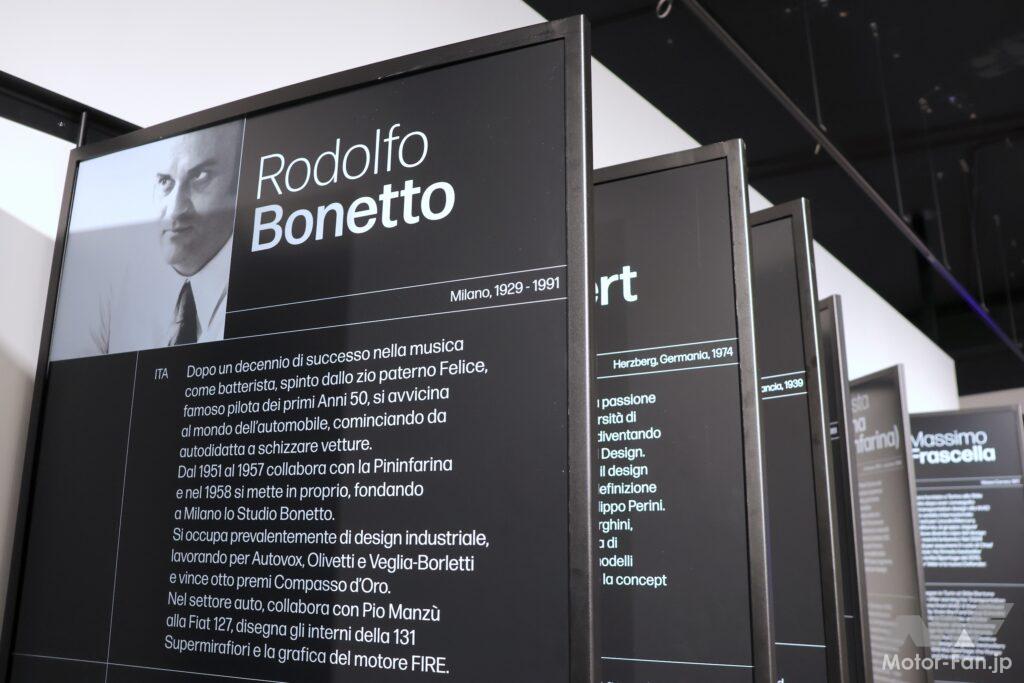
The car designer section in the new Spazio Design has been extensively redesigned. Large binder-style panels now introduce a far greater number of designers than before, together with brief biographies. The range of eras and nationalities represented has also expanded, with Japanese designers including Shiro Nakamura and Tom Matano. Since the system allows additional panels to be inserted, it will presumably continue to be updated over time.
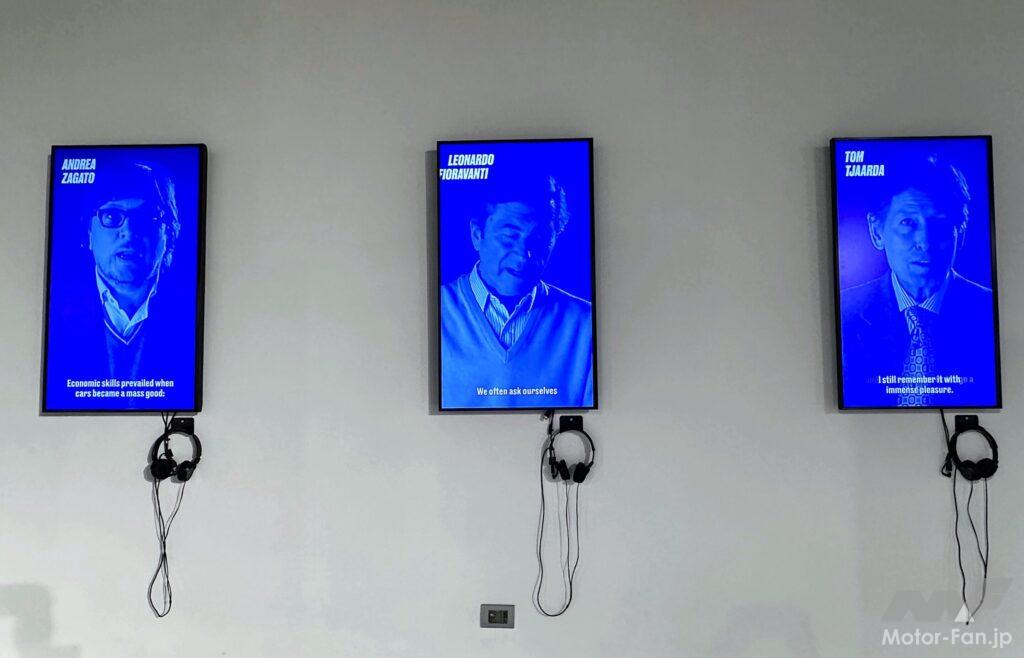
Designers who had been given particular prominence in the previous exhibition can now be seen and heard in video interviews via dedicated displays and headphones.
Leafing through the panels devoted to car designers, one is struck by the remarkable diversity of their backgrounds.
Take Flaminio Bertoni (1903–1964), for example. He moved to Paris with the approach of a sculptor, a discipline he had studied in Italy, and went on to create some of Citroën’s greatest masterpieces, including the 2CV and DS.
Giovanni Savonuzzi (1911–1988), who designed the Cisitalia 202—now part of the permanent collection of the Museum of Modern Art (MoMA) in New York—began his professional career at Fiat Aviazione, Fiat’s former aircraft manufacturing division.
Rodolfo Bonetto (1929–1991), meanwhile, spent nearly a decade as a jazz drummer before teaching himself automotive design at the suggestion of his father, who had been a racing driver. After working with Pininfarina, he collaborated with companies including Olivetti and went on to win the Compasso d’Oro. He also played an important role alongside the brilliant but tragically short-lived Pio Manzù in the design development of the Fiat 127.
Today’s automotive development environment is vastly more sophisticated than it was in their era, and there is no question that the advanced, systematic curricula offered by specialized design schools are highly effective. Yet the fact that people who followed such seemingly “roundabout” career paths were able to create some of history’s great automobiles also seems to raise certain questions about increasingly standardized systems of design education.
For those who work in car design, those who are interested in it, and those aspiring to enter the profession, the opening of Spazio Design has made a visit to MAUTO more worthwhile than ever. You may well find yourself so absorbed that you completely lose track of time.
Until next time, arrivederci!
カーデザインの関連記事


スバルはなぜ「この顔」を捨てたのか? 2003年のB11Sが描いた未来と、ヘキサゴングリル誕生の真相

![by Car Styling [カースタイリング]](https://motor-fan.jp/wp-content/uploads/2025/04/carstyling-jp_logo.png)
全長3mで4人乗りを実現。フィアット・ムルティプリーナは600ムルティプラのコンセプトを現代に継承

部品点数を抑えた合理的なデザイン。プロポーションから一新されたAセグメントBEVの2代目「ダチア・スプリング」

ワイドで力強い表情がフラッグシップの証。BYDの7人乗りSUV「ATTO 8」がパリでデビュー

ウイングに頼らず、ボディ造形でダウンフォースを生む。シャオミが手掛けた電動ハイパーカーが『グランツーリスモ7』で走り出す

